Every fall storm searches out the weakest seal on a roof and finds it fast. Roofs usually fail at the seams, which are the small sealed joints where two different materials meet, and one weak connection lets water in. Fall storms put pressure on exactly those spots, so checking them now costs far less than dealing with a leak once the weather turns. Four areas are worth a close look before the season starts.
1. Plumbing Vents
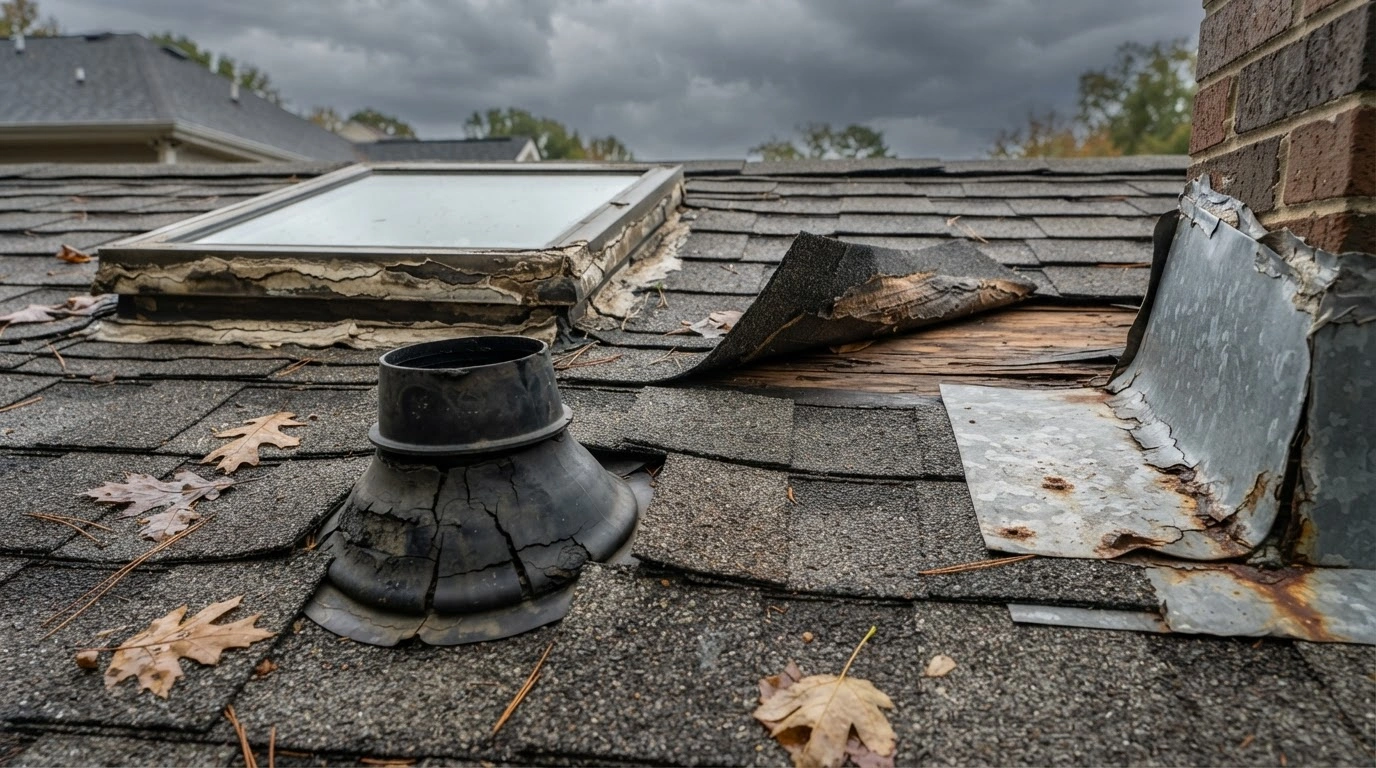
The plumbing vent that passes through a roof relies on a rubber or neoprene collar to keep water out around the pipe. This collar sits directly in sunlight for years, and UV exposure can eventually make the rubber crack and stiffen. Once the material splits, water flows down the pipe and into the attic.
A quick look from the attic side, checking for daylight around the pipe base or dark staining on the decking, catches this early enough to replace the collar instead of repairing water damage. Replacement collars are inexpensive, and the swap usually doesn’t take roofers long. Homes with several plumbing stacks running through the roof are worth checking one at a time, since sun exposure and wear rarely hit every collar at the same rate, and a collar on a south-facing slope tends to degrade faster than one shaded through most of the day.
2. Chimney Flashing
Chimney flashing seals the joint where masonry meets roofing while also flexing slightly as a house settles and temperatures shift. Two common failure points here are the metal step flashing along the sides pulling away from the brick, and the mortar or caulk line where counter-flashing meets the chimney cracking and opening up a gap.
InterNACHI, the trade organization that trains and certifies home inspectors, notes that when counter-flashing relies on caulk alone, the sealant eventually dries and cracks, necessitating regular checks and reapplications.
A close inspection should include the metal joints themselves and the mortar line where the chimney meets the roof deck. Rust streaks running down the chimney face are often the first visible clue that this seal needs attention.
3. Skylights
Skylights bring in beautiful natural light, but they also introduce a large penetration into the roof system. The U.S. Department of Energy notes that skylights are a common source of water penetration in homes. This is largely because the flashing and sealant surrounding them are subject to so much direct water exposure.
Some areas deserve a close look here. First, check the outer glass seal for fogging between panes, which signals a failed seal even if no water has entered yet. Second, inspect the surrounding metal flashing for gaps, rust or lifted edges where it meets the shingles.
4. Roof Valleys
A well-constructed and well-maintained roof valley is a key component to preventing leakage. Roof valleys carry more water than almost any other part of a roof, since they collect runoff from two separate areas' slopes and funnel it toward the gutters. That concentrated flow makes any gap in the seam a serious problem. Valleys are especially vulnerable to leaks around penetrations and to heat buildup, which can contribute to ice dam formation later in the season.
Homeowners should check that valley seams are tight along their entire length, with no visible rust or gaps in the flashing. Any pooling debris in the valley should be cleared, since trapped leaves and grit retain moisture against the roof and accelerate corrosion.
The Importance of Sealant Quality in Storm-Proof Roofing
The material behind a seal is just as important as its placement. Different sealants hold up differently against extreme weather conditions. This difference shows up in how long a roof stays watertight between inspections. For example, Acti-Min® kaolin products can serve as reinforcing fillers in roofing-related materials, helping support structural stability and durability. Homeowners who are comparing repair products or asking a contractor about material choices should take sealant quality into account.
Homeowners who are comparing repair products or asking a contractor about material choices should take sealant quality into account. Proactivity is key to rainstorm preparedness, especially given that service providers’ schedules become busier as storm season approaches. A sealant built for genuine weather resistance will likely outlast a generic caulk by a wide margin, and that difference plays out exactly where it matters most — at the seams this guide has covered.
Keeping the Roof Ready for Fall
These checks can be fairly simple to conduct safely. A pair of binoculars, a walk around the yard, and an eye for cracked rubber, rusted metal or gapped seams can catch most problems before a storm does, ensuring optimum roof maintenance. Roofing seals are small components with an outsized job, and a little attention now goes a long way toward keeping fall storms outside, where they belong. Working through this checklist once a year, ideally before the first fall storm arrives, is a small investment that can spare a homeowner far larger repairs down the road.