If you wake up stuffy and sneezing, it’s a clear sign of dirt and dust buildup on your mattress. Sneezing and similar problems occur more often if you are prone to allergic reactions. The American Lung Association says most dust mite exposure happens while we sleep, because the allergen clings to bedding, mattresses, and carpets instead of floating around the room. That is why allergy bedding covers are the first thing most allergists suggest. They are also oversold. Here is what they do, where the evidence gets shaky, and how to buy one without wasting money.
What an Allergy Cover Actually Does
A cover does not kill dust mites. An allergy cover has tightly woven fabric and small pores that act as a barrier, preventing mites or their droppings from passing through. The droppings are what trigger your symptoms, so sealing them in (or keeping them out of your pillow) matters more than killing anything.
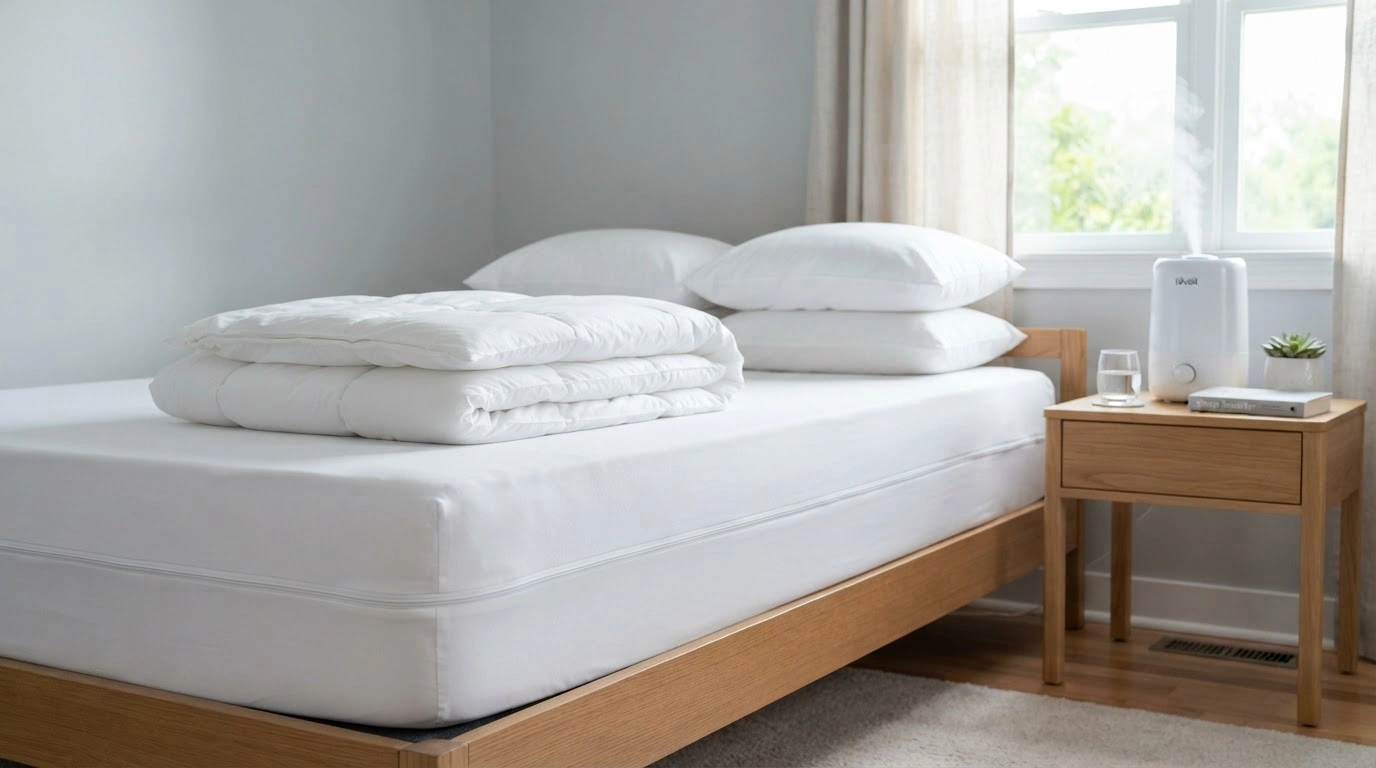
There are two styles: a protector and an encasement, and people often mix them up. A protector has an elastic skirt like a fitted sheet and leaves the bottom of the mattress open. An encasement zips shut around all six sides. For allergies, I would only count the encasement. A protector is fine for spills and sweat, and our breakdown of mattress protectors and other parts of bedding covers that job well, but mites can still get in from underneath.
One label trap: "hypoallergenic" is marketing, not a test result. Look for the words "allergen-impermeable" or "dust mite proof," ideally with third-party certification.
What the Research Says (and the Part Sellers Skip)?
Here is where I disagree with a lot of product roundups. A large Cochrane review looked at 55 trials involving 3,121 people with asthma and found no clear clinical benefit from mite-control measures, including mattress encasements. Cochrane has since flagged that review as dated and not suitable for clinical decisions, so I would not read it as "covers are useless." I read it as "a cover alone is not a treatment."
That matches how allergists actually use them. A cover is one cheap, low-risk piece of a plan that also includes washing and humidity control. If you have asthma, check with your doctor before expecting a cover to change your symptoms. If you have a stuffy-nose problem, a $30 to $60 encasement is a reasonable experiment, not a cure.
What to Cover, in Order of Importance?
1. Pillows: Your face sits on them for 7 or 8 hours, and skin flakes, oil, and sweat build up fast. A zippered pillow encasement does what a standard pillowcase cannot.
2. Mattress: Full encasement, zipper sealed. Some pediatric allergy clinics recommend a strip of tape over the zipper as a cheap trick.
3. Box Spring: This one gets skipped most often. A box spring is basically a fabric-covered frame, as we explain in our guide to the parts of a bed, and it sits right under you, collecting the same dust. Vinyl covers are the usual pick here since nobody touches it.
4. Duvet or Comforter: Use a zippered duvet encasement or a cover you can wash weekly.
Vinyl, Polyester, or Cotton?
This is mostly a comfort tradeoff, since the barrier performance is similar across properly made covers.
- Vinyl or plastic is the cheapest and waterproof material. It is also crinkly and traps heat. I would use it on a box spring and think twice about the top of a bed, especially if you sleep hot.
- Polyester microfiber is quieter and fairly breathable. It is the most common material in mid-priced encasements.
- Cotton feels and breathes best, but it costs more, and the weave has to be tight enough to qualify. Some roundups list quality duvet and mattress protectors in the $80 to $120 range, which is where cotton usually lands.
Check your mattress height before buying. A pillow-top or a topper can push you past a standard encasement depth. Our guide to choosing the right mattress explains how toppers and protectors stack, and it is worth reading before you order the wrong size.
How to Put One on Without Sealing the Dust In?
Strip the bed, vacuum the mattress with the upholstery attachment, then zip on the encasement. A king takes two people and about 15 minutes. Expect a few minutes of wrestling at the corners. Do not skip the vacuuming step, because sealing a dusty mattress locks everything in.
You do not need to wash the encasement every week. Wipe it with a damp cloth or run a hard-edge vacuum attachment over it about once a month, and wash it when it is visibly dirty.
The Habits That Make a Cover Worth Buying
Wash what is on top, hot. Most allergy sources, including children's hospitals, recommend washing sheets and pillowcases weekly at 130°F. The American Lung Association gives a lower minimum of 120°F, so there is some disagreement. If your water heater is set to 120°F for scald safety, as many are, use the hottest setting your fabrics allow, then dry on high heat. Check the care label first, because high heat can shrink polyester, a point we cover in does polyester shrink in the dryer.
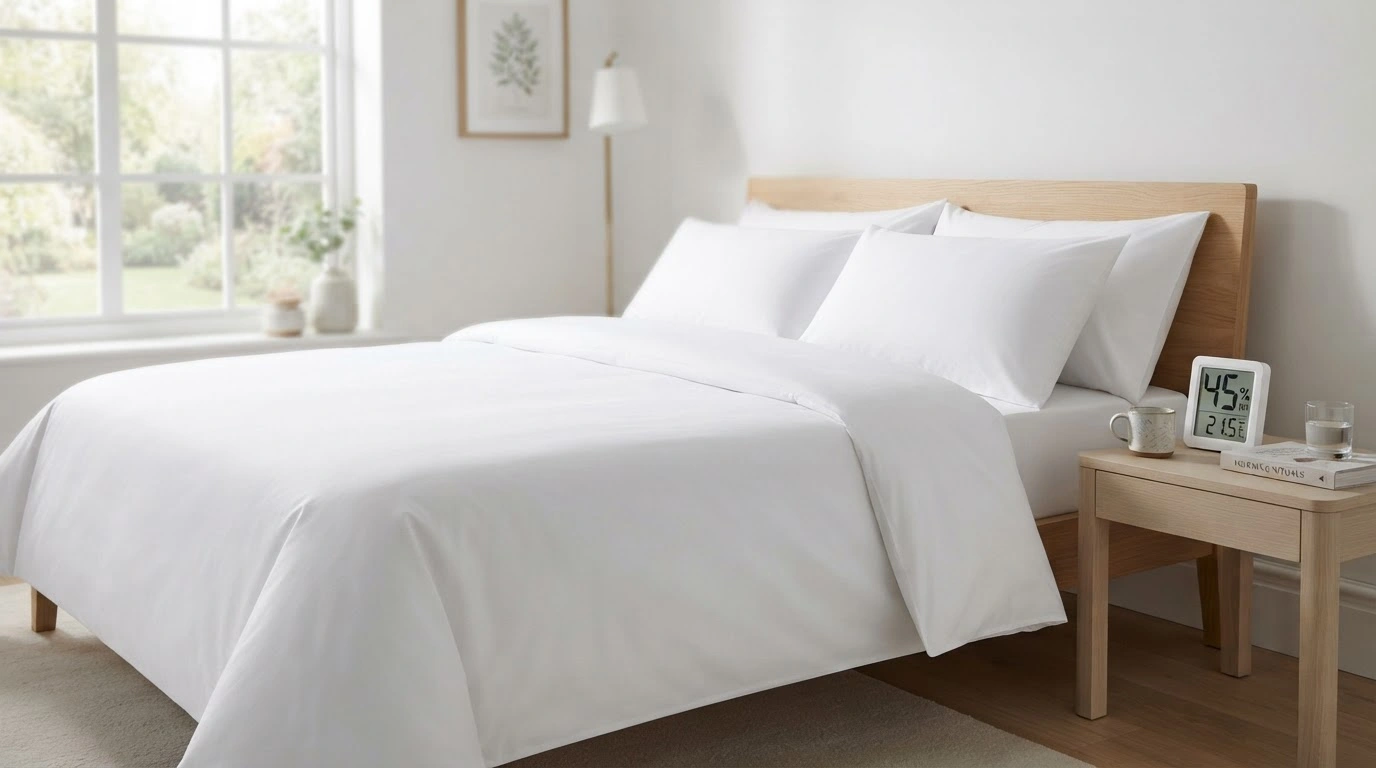
Control humidity. This is the most underrated step. Mites absorb water from the air, and they struggle below roughly 50 percent relative humidity. A basic hygrometer costs about as much as a sandwich and tells you whether you have a problem. Running a bedroom humidifier all winter can quietly undo everything a cover does.
Choose fabrics you can wash. Bedding that holds onto dust is the enemy. Our post on creating a healthy bedroom environment makes the case for breathable cotton or linen sheets, which also hold up well to hot washes.
Don't rely on an air purifier alone. Mite allergen settles quickly into fabric instead of staying airborne, so a purifier is a weaker tool for this problem than for pet dander. If you share your bed with a dog, it still helps, and we looked at how far air purifiers go in helping with pet hair.
What I Would Buy First?
If you have a limited budget, start with pillow encasements, then the mattress, then the box spring. Wash weekly, buy a hygrometer, and give it a month before judging. If nothing changes, the culprit may be pollen, pets, or mold, and that is a question for an allergist, not a bigger shopping cart.