

Choosing the right driveway pavers means balancing durability, design flexibility, and long-term value. With freeze-thaw cycles, heavy vehicle loads, and curb appeal all on the line, not every paver brand delivers equally. Manufacturers like Techo-Bloc have raised the bar with technologies like HD2 that produce denser, lower-maintenance driveway pavers engineered to hold their color and resist cracking for decades. But several other brands bring strong options depending on budget, style, and regional availability. In this guide, we review the 7 best driveway paver brands, with their strengths, product highlights, and what sets each one apart.
1. Techo-Bloc
Techo-Bloc has built its reputation on engineering pavers that perform in the harshest North American climates. The brand's HD2 (High Definition and Density) technology creates a tighter surface with fewer pores, resulting in more vibrant color retention and better resistance to staining over time.
Why Choose Techo-Bloc for Your Driveway?
Techo-Bloc pavers are designed to handle both residential and commercial vehicular loads. Their products meet and surpass ASTM and CSA standards for freeze-thaw durability, which means they won't crack or spall after repeated winter cycles, even with rock salt exposure.
The real advantage is long-term cost. Techo-Bloc pavers cost more upfront than most alternatives, but they require minimal maintenance and don't need seasonal patching or resurfacing. For homeowners who want a driveway that looks as good in 10 years as it does on installation day, the long-term savings make the investment worthwhile.
Color is integrated throughout the entire unit rather than applied to the surface only. This means chips or natural wear won't reveal mismatched inner layers, keeping the driveway visually consistent over its lifespan.
2. Pavestone
Pavestone is one of the most widely distributed paver brands in the United States, with products available at major retailers like Home Depot and Lowe's as well as through local dealers. Founded in 1980 and now part of Oldcastle APG (a division of CRH), Pavestone operates over 20 manufacturing facilities across more than 40 states.
Why Choose Pavestone for Your Driveway?
Pavestone's strength is accessibility. The brand covers a wide price range, making it one of the more budget-friendly options for homeowners who want a paver driveway without the premium price tag.
The product line includes standard interlocking pavers, permeable options, and specialty shapes in a variety of colors and textures. For homeowners working with a contractor who sources from big-box retailers, Pavestone is often the default recommendation because of its availability and consistent quality.
Pavestone pavers are dry-cast concrete, which means they hold up well in moderate climates and handle typical residential traffic without issue. For regions with extreme freeze-thaw cycles, however, it's worth comparing Pavestone's specs against brands that engineer specifically for harsh winters.
3. Keystone Hardscapes
Keystone Hardscapes has been manufacturing pavers and retaining walls since the 1980s. Also part of the QUIKRETE Companies, the brand positions itself as locally made but nationally trusted, with regional product catalogs tailored to different markets across the US.
Why Choose Keystone Hardscapes for Your Driveway?
Keystone's catalog includes a solid range of paving stones, from standard interlocking pavers to large-format patio stones suitable for driveway borders and accents. Products like the Camden Cobble and Campton pavers give homeowners options in both traditional and contemporary styles.
The brand's regional approach means product availability and color selections vary by market. This localized model ensures that the pavers you buy are manufactured closer to your project site, which can reduce delivery costs and lead times.
Keystone Hardscapes is a reliable mid-range choice for homeowners who want design flexibility and a nationally backed product without stepping into the premium tier.
4. Nitterhouse
Nitterhouse Masonry Products is a family-owned company founded in 1923 in Chambersburg, Pennsylvania. With over 100 years of manufacturing experience, the brand primarily serves the East Coast and has built a strong reputation among contractors for consistent quality and high-strength concrete products.
Why Choose Nitterhouse for Your Driveway?
Nitterhouse stands out for its architectural pavers, which combine durability with a natural aggregate finish that mimics the look of stone. These pavers are manufactured under high pressure, resulting in exceptional density and strength suited for both residential and commercial vehicular applications.
The brand also offers Village Tumbled Pavers for homeowners who prefer a cobblestone aesthetic. These interlocking units deliver a warm, old-world character without the installation challenges of natural stone.
Nitterhouse's contractor network on the East Coast is well-established, and their sales team is known for hands-on project support. If your property is in the Mid-Atlantic or Northeast region, Nitterhouse is worth considering for its combination of heritage, product quality, and local expertise.
5. Hanover
Hanover Architectural Products has been manufacturing concrete unit paving products since 1971 from its headquarters in Hanover, Pennsylvania. The brand is American-owned and operated, with a strong focus on commercial and architectural applications.
Why Choose Hanover for Your Driveway?
Hanover uses a homogenous mix design, applying over 1 million pounds of pressure to each unit. This process creates pavers with superior strength and eliminates common issues like delamination, spalling, and warping that can occur with double-mix manufacturing.
The brand's library includes over 3,800 granite-like color blends, making it one of the most customizable options on the market. For homeowners who want a truly unique driveway color palette, Hanover offers a level of custom aggregate blending that most competitors don't match.
Hanover pavers tend to lean toward a classic 4x8 brick format, which gives driveways a timeless look. The brand also manufactures porcelain and granite pavers for homeowners who want natural material aesthetics with engineered performance.
6. Tremron
Tremron is the largest privately-owned paver manufacturer in the Southeast United States. Founded in 1992 in Jacksonville, Florida, the company operates 7 manufacturing plants across Florida, Georgia, and South Carolina, with design centers in key markets throughout the region.
Why Choose Tremron for Your Driveway?
Tremron's product line is engineered for warm-climate performance. In the Southeast, driveway pavers face different challenges than in northern states: intense UV exposure, heavy rain cycles, and subtropical heat rather than freeze-thaw damage.
The brand offers a wide selection of styles, from traditional cobblestone looks to clean contemporary designs. Their Authorized Contractor program ensures that installers have passed specialized training and exams, which adds a layer of quality assurance to the installation process.
For homeowners in Florida, Georgia, the Carolinas, Alabama, or Tennessee, Tremron's regional focus translates to shorter lead times, local design center support, and products specifically tested for Southeast conditions.
7. Artistic Paver
Artistic Paver is a South Florida-based manufacturer that specializes in high-end interlocking concrete pavers and coping for luxury residential projects. The brand's product line includes the Roadlock driveway paver series, designed specifically for vehicular applications.
Why Choose Artistic Paver for Your Driveway?
Artistic Paver's manufacturing process produces units that are exceptionally dense and strong, with a focus on premium finishes that elevate the look of a driveway beyond standard concrete pavers.
The brand offers antiqued and textured collections that replicate centuries of natural stone weathering through advanced manufacturing techniques. Each paver carries unique surface characteristics, giving driveways a high-end, handcrafted appearance.
Artistic Paver also manufactures coordinating coping, pool deck pavers, and pedestrian pavers, making it easy to create a unified design language across an entire property. For homeowners in warmer climates who prioritize aesthetics and are willing to invest in a luxury finish, Artistic Paver delivers a level of craftsmanship that sets it apart.
How to Choose the Right Driveway Pavers for Your Home
What Factors Should You Consider When Comparing Driveway Pavers?
-
Climate is the single biggest factor. If you live in a region with harsh winters, you need pavers rated for freeze-thaw durability and de-icing salt resistance. Brands like Techo-Bloc and Nitterhouse engineer specifically for these conditions, while Tremron and Artistic Paver optimize for warm-climate performance.
-
Traffic load determines thickness requirements. Standard residential driveways typically need pavers at least 60-80 mm thick. Driveways that handle heavier vehicles, delivery trucks, or frequent traffic benefit from 100 mm pavers rated for commercial applications.
-
Design preferences narrow your options further. Some brands specialize in contemporary geometric shapes (Techo-Bloc Industria, Hanover), while others focus on traditional tumbled or cobblestone looks (Nitterhouse Village, Pavestone). Consider whether you want a uniform modern surface or a more textured, organic appearance.
-
Budget and availability play a practical role. Pavestone and Keystone Hardscapes offer accessible pricing through national retail distribution. Premium brands like Techo-Bloc, Hanover, and Artistic Paver cost more upfront but often deliver better long-term value through lower maintenance and longer lifespans.
Which Paver Thickness Is Best for Driveways?
For standard residential driveways, 80 mm (approximately 3 1/8 inches) is the most common recommendation. This thickness handles private vehicles, SUVs, and light delivery trucks without issue.
For driveways that see occasional heavy vehicles or double as shared access roads, 100 mm (approximately 4 inches) pavers provide additional load-bearing capacity. Products like Techo-Bloc's Diamond HD2 and Industria 150-900 Series are rated for commercial heavy traffic at this thickness.
Thinner pavers (60 mm) are generally not recommended for vehicular use unless the manufacturer explicitly rates them for driveway applications with proper base preparation.
What to Expect When Installing Driveway Pavers
How Long Does a Typical Driveway Paver Installation Take?
A standard 2-car residential driveway typically takes 3 to 5 days to complete, depending on the complexity of the design, site preparation needs, and weather conditions.
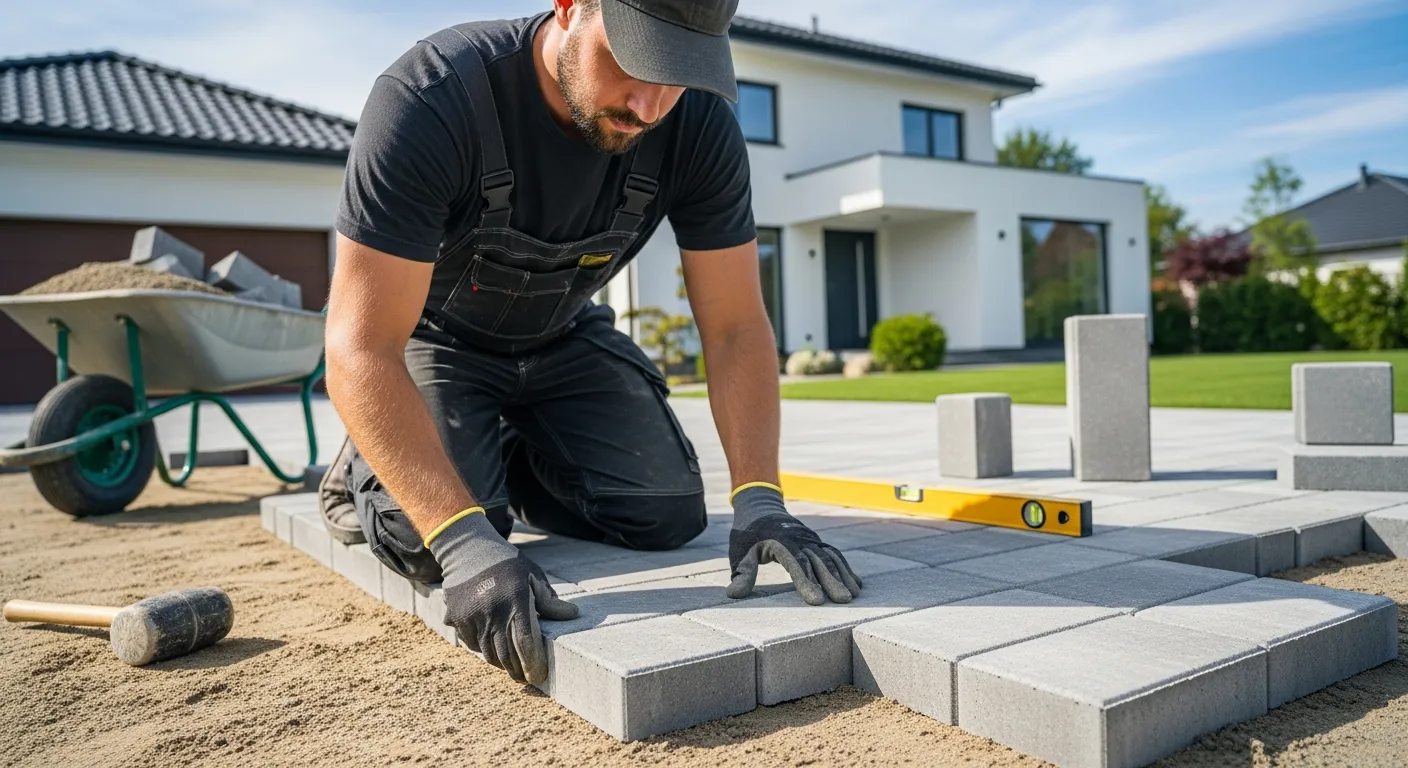
The process follows a consistent sequence: excavation and grading, compacted granular base installation (typically 4-8 inches depending on soil conditions), sand setting bed, paver placement, edge restraint installation, and polymeric sand joint filling.
Proper base preparation is the most critical step. Skipping compaction layers or using insufficient base depth leads to settling and shifting over time, regardless of how high-quality the pavers are. Always work with an experienced installer who follows the manufacturer's specifications for base thickness and compaction.
Key Takeaways for Choosing Driveway Pavers in 2026
The best driveway pavers for your home depend on where you live, how much traffic your driveway handles, and the look you want to achieve. Techo-Bloc leads the market for homeowners who prioritize long-term durability and low maintenance in all climates. Pavestone and Keystone Hardscapes offer solid performance at more accessible price points. Nitterhouse and Hanover bring heritage craftsmanship and specialized options for East Coast and architectural projects. Tremron dominates the Southeast market, and Artistic Paver serves homeowners who want a luxury finish in warmer regions.
Invest in proper installation with a qualified contractor, choose the right thickness for your traffic needs, and select a brand that engineers for your specific climate. A well-chosen paver driveway will outperform poured concrete in both looks and longevity for decades.
Frequently Asked Questions About Driveway Pavers
How Long Do Driveway Pavers Last Compared to Poured Concrete?
Quality driveway pavers typically last 25 to 50 years with proper installation and minimal maintenance. Poured concrete driveways generally last 20 to 30 years but often develop cracks within the first decade due to settling and freeze-thaw cycles. Pavers also have the advantage of individual unit replacement: if one paver cracks or stains, you can swap it out without tearing up the entire surface.
Are Driveway Pavers Worth the Higher Upfront Cost?
Paver driveways cost more than poured concrete or asphalt at installation. However, they require significantly less maintenance over their lifespan. Concrete driveways often need crack repair, resurfacing, or full replacement within 15-20 years. Pavers avoid these recurring costs because their interlocking design allows for natural ground movement without cracking. When you factor in long-term repairs and replacement cycles, pavers frequently deliver a lower total cost of ownership.
What Is the Best Paver Material for Cold Climates?
Dry-cast concrete pavers engineered for freeze-thaw resistance are the top choice for cold climates. Look for products that meet or exceed ASTM C936 (for interlocking pavers) or ASTM C1782 (for slabs) freeze-thaw durability standards. Brands like Techo-Bloc specifically warrant their pavers against damage from rock salt (sodium chloride) de-icing, which is a critical consideration in northern states where salt use is heavy throughout winter.


