

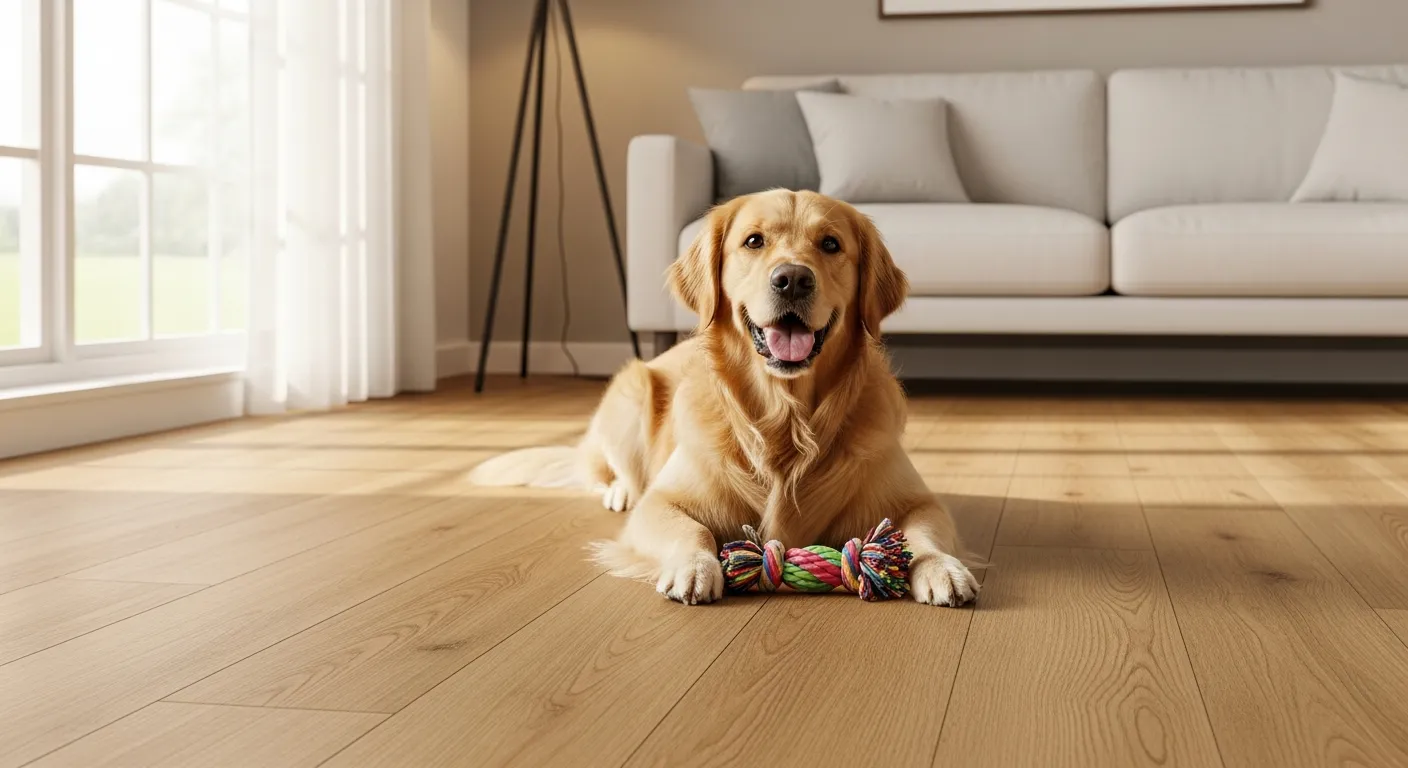
If you share your home with a dog or you’re planning to get a dog, you know the impact that a dog can have upon your floors. Whether it’s muddy paws from a walk in the rain or the skid-and-slide of a pup bounding to the door to greet you, dogs can challenge even the most durable of floor manufacturers’ efforts at creating a product that can stand the test of time. However, with the proper flooring for your home, your dog can enjoy the floors without worry - all that remains is the introduction of the perfect pup to your home!
What to Look for in Dog-Friendly Flooring
Before diving into specific flooring types, it helps to understand the four performance factors that matter most for dog owners:
- Scratch resistance: Dogs’ nails can gouge and scuff softer surfaces over time.
- Stain & moisture resistance: Accidents happen — especially with puppies. Waterproof or water-resistant surfaces are far easier to clean and won’t warp or absorb odours.
- Traction: Slippery floors are uncomfortable and even dangerous for dogs, particularly older pets with joint issues.
- Ease of cleaning: Fur, dander, and dirt accumulate fast. Smooth, non-porous surfaces make daily maintenance far quicker.
The 5 Best Flooring Types for Dog Owners
1. Luxury Vinyl Plank (LVP) — Best Overall
Luxury vinyl plank (LVP) flooring is the gold standard for pet owners for several reasons. Firstly, it is 100% waterproof. Secondly, it is highly scratch-resistant. Thirdly, the flooring is soft underfoot, which is better for a pet’s joints.
- Pros: Fully waterproof, scratch-resistant, comfortable, easy to install
- Cons: Cannot be refinished; lower-end products can look artificial
- Best for: High-energy breeds, puppies, homes with multiple dogs
2. Porcelain or Ceramic Tile — Most Durable
Tile is essentially indestructible in terms of scratches and moisture. It’s the easiest floor to mop up spills on and it will never absorb the odours of your pets. The downside of this floor option is that it’s extremely hard which will be uncomfortable for an older dog’s joints in the winter, and will be cold to the paw pads of your dog when they walk on it during the winter months.
- Pros: Scratch-proof, 100% waterproof, hypoallergenic, long lifespan
- Cons: Hard and cold; can be slippery without a matte or textured finish
- Best for: Kitchens, laundry rooms, high-traffic entry areas
3. Hardwood Flooring — Best for Aesthetics (with Caveats)
Hardwood remains a popular choice for its warmth and timeless look, but it requires more care in a dog household. Harder species like oak, hickory, or bamboo fare better than softer timbers. Look for a tough aluminium oxide finish and choose a matte or satin sheen, which hides scratches better than gloss.
- Pros: Beautiful appearance, can be refinished multiple times, adds home value
- Cons: Susceptible to scratches; moisture damage if accidents aren’t wiped quickly
- Best for: Calmer breeds, homes with older or well-trained dogs
4. Laminate Flooring — Budget-Friendly Pick
Laminate flooring has improved dramatically in the past few years. laminate floors rated AC4 or AC5 will provide good scratch resistance for a fraction of the cost of hardwood or LVP flooring. While laminate flooring is not waterproof, there are now options for laminate flooring that is waterproof and would be better suited to homes with pesky pets.
- Pros: Affordable, scratch-resistant, realistic wood look
- Cons: Standard versions are not moisture-proof; cannot be refinished
- Best for: Budget-conscious renovations in lower-traffic rooms
5. Cork Flooring — Best for Joint Health
Cork is an underrated dog bed option. The natural cushioning is excellent for dogs with joint problems, especially larger breeds or elderly dogs with hip dysplasia. It also has natural traction. The downside to cork is that it’s one of the softer dog bed materials so there could be indentations from furniture or very active dogs.
- Pros: Soft and comfortable, natural traction, eco-friendly
- Cons: Can dent under heavy load; needs regular sealing for moisture protection
- Best for: Senior dogs, large or giant breeds, households prioritising comfort
Flooring to Avoid with Dogs
Not all flooring holds up to dog ownership equally. Here’s what to think twice about:
- Carpet: Fibres trap dander, fur, and odours deeply. Stains are difficult to fully remove and mould can develop under wet patches.
- Polished concrete: Very slippery when wet, cold, and hard on joints. Without rugs, it’s one of the least comfortable surfaces for dogs.
- Softwood floors (pine, fir): Beautiful, but scratch and dent very easily under dog nails.
Pro Tips for Maintaining Any Floor with Dogs
- Trim your dog’s nails regularly — this single habit reduces scratch damage more than any flooring choice.
- Use entry mats at doors to catch mud and moisture before it spreads through the house.
- Place area rugs in high-traffic zones like feeding areas and favourite resting spots for added protection.
- Clean up accidents immediately — even “waterproof” floors can be damaged if moisture seeps into seams over time.
- Use felt pads under furniture legs to prevent scratching when your dog bumps or pushes items.
