

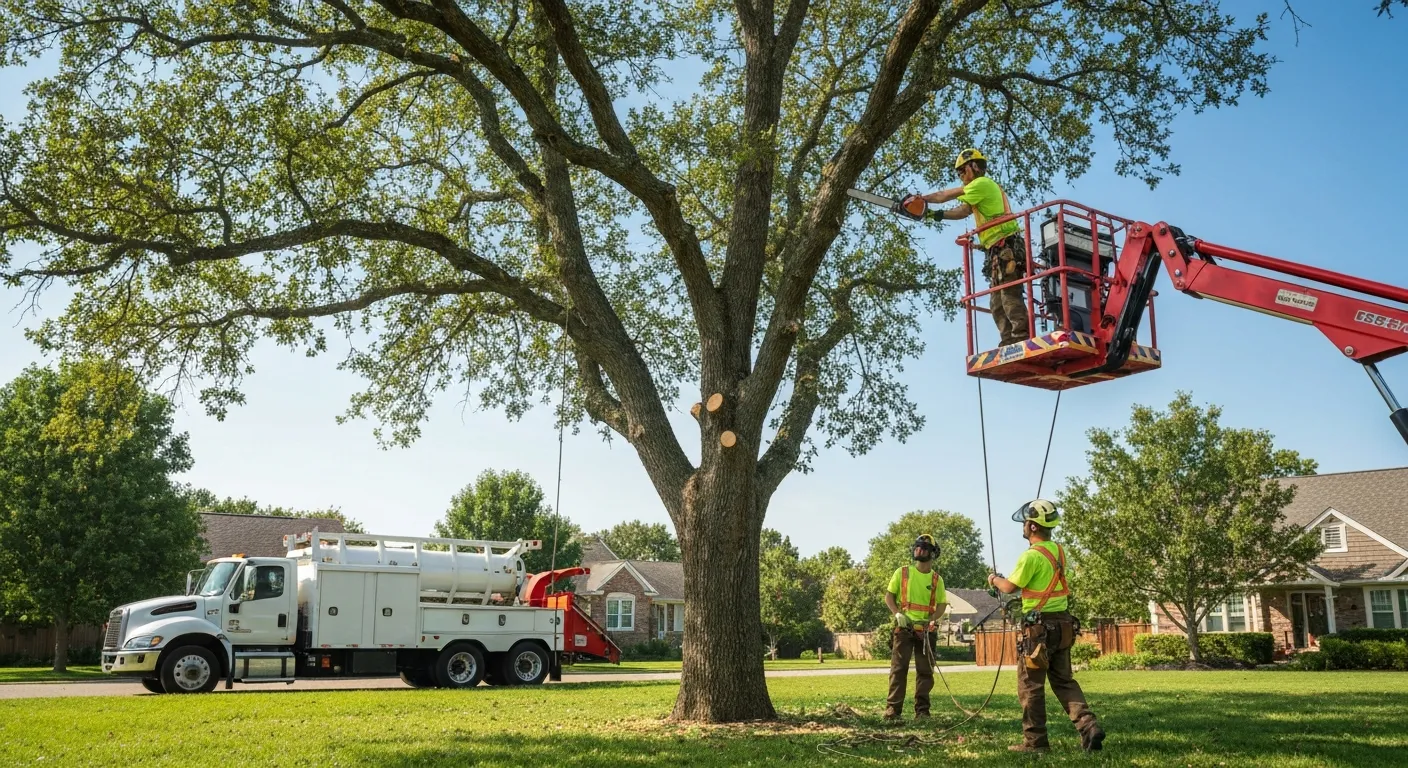
A heavy storm rolls through, and the next morning you notice a long crack running down the trunk of your biggest oak. Or maybe you've been watching a limb hang over the driveway for months, hoping it holds. Either way, you know you need a professional, but choosing the right one can feel overwhelming. There are dozens of listings online, a few flyers in the mailbox, and sometimes a crew at the door after a storm.
Hiring the wrong tree service can lead to property damage, injury, or paying twice to correct poor work. The good news is that vetting a company is straightforward once you know what to ask. This guide walks you through the main checks so you can hire with more confidence and keep your yard safer.
Safety Starts with the Right Pro: What Qualified Really Means
Licensing and Insurance Made Simple
Before anyone starts chainsaw work on your property, ask for a current certificate of liability insurance and workers' compensation coverage. The keyword is current. Request a certificate issued directly by the insurer, not just a photocopy the crew carries around. If a worker is injured or property is damaged and the company lacks valid coverage, you may face avoidable costs. Requirements vary by city and state, so confirm the rules where you live.
Recognized Credentials
An ISA Certified Arborist credential shows that the person has passed a professional exam and keeps up with continuing education in tree biology and safety. You can verify an arborist's certification number through the International Society of Arboriculture's public lookup tool before you hire. This quick check helps separate trained professionals from people who simply own equipment.
Safety Plan and Equipment
When the crew arrives for an estimate, notice the details. Do they mention hard hats, eye protection, and rigging for overhead work? Do they explain how they will protect your roof, fence, driveway, or garden beds from falling debris? A company that talks about safety before you ask is usually one that takes the job site seriously.
How to Research and Shortlist Local Pros
Build a Short List the Smart Way
Start by asking neighbors, especially those with mature trees similar to yours. Word of mouth is still one of the most useful filters. Then scan online reviews, but focus on patterns rather than single comments. Repeated praise for punctuality and cleanup, or repeated complaints about hidden fees, tells you more than any single star rating. Confirm that the company has a local address and a working phone number. If the tree is close to your roof, driveway, or a play area, a quick review of tree safety concerns can help you describe the risk clearly when you call. Be cautious of crews that show up uninvited after storms, offering steep discounts for same-day work.
What to Request on First Contact
When you call or email, ask for proof of insurance, credential details, and availability for an on-site visit. A reputable company should be willing to provide basic documentation. Keep a simple comparison grid on paper or in a spreadsheet with columns for company name, insurance status, credentials, estimated total, and notes. This makes it easier to compare two or three bids side by side.
If you're planning seasonal work beyond one tree issue, a broader look at your yard's annual needs can help you prioritize. A resource like a seasonal yard maintenance checklist can outline common tasks month by month so you know what to bundle when requesting estimates.
Compare Estimates Apples to Apples
Scope Clarity
A written estimate should spell out exactly what will happen. Which trees or limbs are included? Is the crew pruning or removing? How will they access the work area, and what steps will protect your lawn, garden beds, and structures? Cleanup and disposal should be itemized separately, and stump grinding should be listed as its own line item if it applies. When every bid uses the same level of detail, you can compare them more fairly.
Scheduling and Logistics
Ask about the expected timeline, crew size, and equipment. Find out whether heavy trucks need to park on the street or your lawn. Before stump grinding or any digging begins, underground utility locates should be confirmed through the national 811 "Call Before You Dig" service. This helps prevent accidental damage to gas, water, or electrical lines beneath your yard.
Aftercare and Warranties
Ask whether the company offers plant health care recommendations for nearby trees or shrubs that could be affected by the work. Confirm who keeps the wood and chips, and ask how to reach the company if concerns come up after the job is finished. Clear answers usually point to a company that stands behind its work and can help connect one job to strategic tree care instead of treating every limb or stump as a separate surprise.
Getting Started if You Live in Rochester, Minnesota
If you're comparing options in the Rochester area, checking what local providers offer is a practical first step. Many municipalities, including Rochester, require permits or notifications before certain trees can be removed, so confirm local rules with the city's forestry office before scheduling work. For a concrete example of how a local company describes its services and qualifications, review tree service Rochester MN to see how one provider lists offerings such as tree removal, trimming, pruning, stump grinding, planting, and plant health care.
Red Flags That Signal You Should Pass
Storm Chasing and Pressure Tactics
A crew that demands cash only, quotes a "today only" price, or asks for full payment before work begins is a red flag. Legitimate companies provide written estimates and reasonable payment terms.
No Paperwork
If someone refuses to show proof of insurance, will not provide a written estimate, or suggests "topping" healthy trees, walk away. Topping means cutting main branches back to stubs, and it is widely recognized as harmful to tree health and structural strength.
Vague Answers About Safety
Ask how the crew plans to protect your roof, fence, and neighboring property. If the answer is a shrug or "we'll figure it out when we get up there," that is a sign to move on.
Set the Right Scope for Your Yard
Common Services in Plain English
Knowing the right terms helps you ask for the service you need. Pruning means selectively removing branches to improve structure, health, or clearance. Removal is taking down an entire tree. Stump grinding uses a machine to chip the remaining stump below ground level. Plant health care can include fertilization, pest management, or disease diagnosis to help protect remaining trees.
Timing Questions to Ask
Different trees respond better to pruning at certain times of year. Ask the arborist when the recommended work is best done in your area and how the timing might affect both the price and the tree's recovery. Booking during a company's slower season can sometimes make scheduling easier.
Conclusion
Hiring a tree service does not have to be stressful. Verify insurance and credentials, get itemized written estimates so you can compare bids fairly, and watch for red flags that separate reliable professionals from risky operators. A little research up front can protect your property, your budget, and your family's safety. Keep this checklist handy the next time you need tree work, and you will be better prepared to hire the right crew.


