

When choosing doors for a home, most people focus on what’s immediately visible—colour, style, maybe the handle. Thickness? It rarely gets a second thought. And yet, it quietly shapes far more than you might expect.
A door’s thickness isn’t just a technical detail tucked away in a spec sheet. It affects how warm a room feels in winter, how much noise seeps through from the next space, how secure your home is, even how substantial or refined a room appears.
From an architectural perspective, thickness sits at the intersection of performance and design. It plays a role in insulation and acoustics, yes but also in proportions, shadow lines, and the overall feel of a space. As homes become more energy-conscious and better insulated, this once-overlooked detail is starting to matter a great deal more.
What Is Standard Door Thickness?
Before diving into design possibilities, it helps to know what’s considered normal. Most interior doors in residential settings fall somewhere between 35 and 40 mm thick. Perfectly adequate for everyday use, lightweight, easy to install, and cost-effective.
But that’s only the baseline. In higher-spec homes, thicker doors, around 45 to 50 mm, are increasingly common. Why? Better sound insulation, improved durability, and a generally more solid feel.
Then there are specialist cases. Home cinemas, music rooms, offices, spaces where noise control really matters, often use doors exceeding 50 mm, sometimes with layered cores and enhanced seals.
So, while standards exist, they’re far from rigid. Think of them as a starting point rather than a rulebook.
The Functional Role of Door Thickness
Thermal Performance and Energy Efficiency
Let’s start with comfort. A thicker door can do a surprisingly good job of keeping heat where it belongs, inside during winter, outside during summer.
This is largely down to what it can hold within its structure. Thicker doors allow for insulating cores, materials like polyurethane foam or mineral wool, that slow down heat transfer. The result? Fewer draughts, more stable indoor temperatures, and lower energy bills over time.
As modern homes lean towards higher efficiency standards, doors are no longer just openings in a wall. They’re part of the thermal envelope and thickness plays a key role in how well they perform.
Acoustic Control and Privacy
If you’ve ever been kept awake by noise from another room, you’ll already appreciate this: thicker doors are better at blocking sound.
Lightweight, hollow-core doors tend to let noise pass through quite easily. Swap them for a solid-core or engineered door, and the difference can be striking. Conversations become muffled. Background noise fades. Spaces feel calmer, more private.
But thickness isn’t the whole story. What’s inside the door matters just as much. Dense cores, think MDF or composite materials, help absorb and dampen sound, while proper sealing around the edges prevents it from sneaking through gaps.
In other words, it’s a combination of depth, density, and detailing that makes the real difference.
Structural Strength and Durability
There’s also a straightforward, practical advantage: thicker doors tend to last longer.
More material means greater resistance to warping, dents, and general wear and tear. That’s especially important in busy households or for external doors exposed to the elements.
Front doors, in particular, benefit from added thickness. They need to handle constant use, changing weather, and of course, security demands. A thicker build allows for stronger cores and more robust hardware, which all adds up to better long-term performance.
Door Thickness as a Design Element
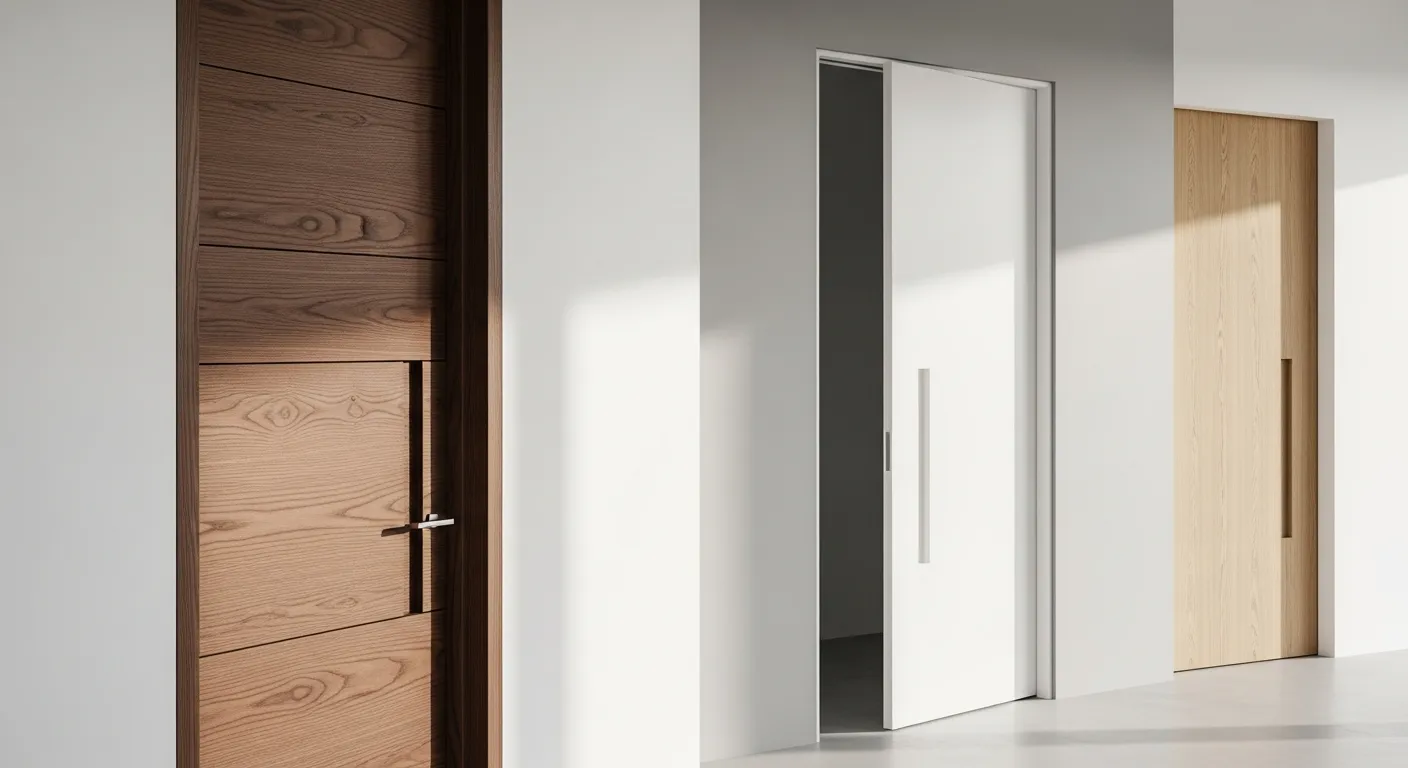
Function aside, thickness has a surprisingly strong visual impact.
In architecture, depth creates shadow and shadow creates interest. A thicker door naturally forms deeper reveals, adding subtle contrast and giving walls a sense of layering. It’s one of those details you might not consciously notice, but you definitely feel.
Thinner doors, by contrast, tend to recede into the background. They suit minimalist interiors where the goal is clean lines and visual simplicity. This same principle can be seen in elements like slim framed sliding glass doors, where reduced visual bulk helps maximise light and maintain a seamless connection between spaces.
Then there’s the contemporary trend of flush doors, often thicker but designed to sit seamlessly within the wall. Done well, they almost disappear, creating uninterrupted surfaces that feel calm and considered.
In more traditional settings, however, a thicker door can signal craftsmanship and permanence. It feels solid, intentional.
So thickness isn’t just functional, it’s expressive.
Material Matters: What’s Inside the Door?
Of course, a door isn’t just a slab of timber. Modern doors are carefully engineered, and what’s inside them matters just as much as how thick they are.
You’ll generally come across three main types. Hollow-core doors are lightweight and affordable, making them a common choice for standard interiors, though they offer limited insulation and sound control. Solid wood doors bring greater durability and a reassuring weight, along with improved acoustic performance. Then there are composite doors, which combine multiple materials to deliver strength, insulation, and stability in one carefully designed structure.
Denser materials tend to perform better across the board. They reduce vibration, which helps with sound, and slow down heat transfer. Some doors go a step further, using multi-layered cores that incorporate sound-dampening materials such as mineral wool. It’s a smart way to boost performance without making the door unnecessarily heavy.
Security and Safety Considerations
When it comes to security, thickness matters. Quite simply, a thicker door can house stronger internal structures and better locking systems. It’s harder to break through and more resistant to forced entry.
Fire safety is another area where thickness plays a critical role. Fire-rated doors are built to specific standards, using carefully designed cores that slow the spread of flames and smoke. Their thickness isn’t arbitrary, it’s essential to how they perform in an emergency.
In both cases, thickness enables the integration of features that protect both property and people.
Space Planning: When Thickness Becomes a Constraint?
Of course, more isn’t always better. Thicker doors come with trade-offs.
They require deeper frames, for one thing. And in smaller rooms, that extra bulk can start to eat into usable space or create awkward clearances when the door swings open.
Weight is another consideration. Heavier doors need stronger hinges and proper installation becomes even more important. Get it wrong, and you’ll notice it every time the door sticks or creaks.
So as with most design decisions, it’s about balance. Performance versus practicality.
Case Studies: Using Door Thickness Creatively
Architects often treat door thickness as an opportunity rather than a constraint.
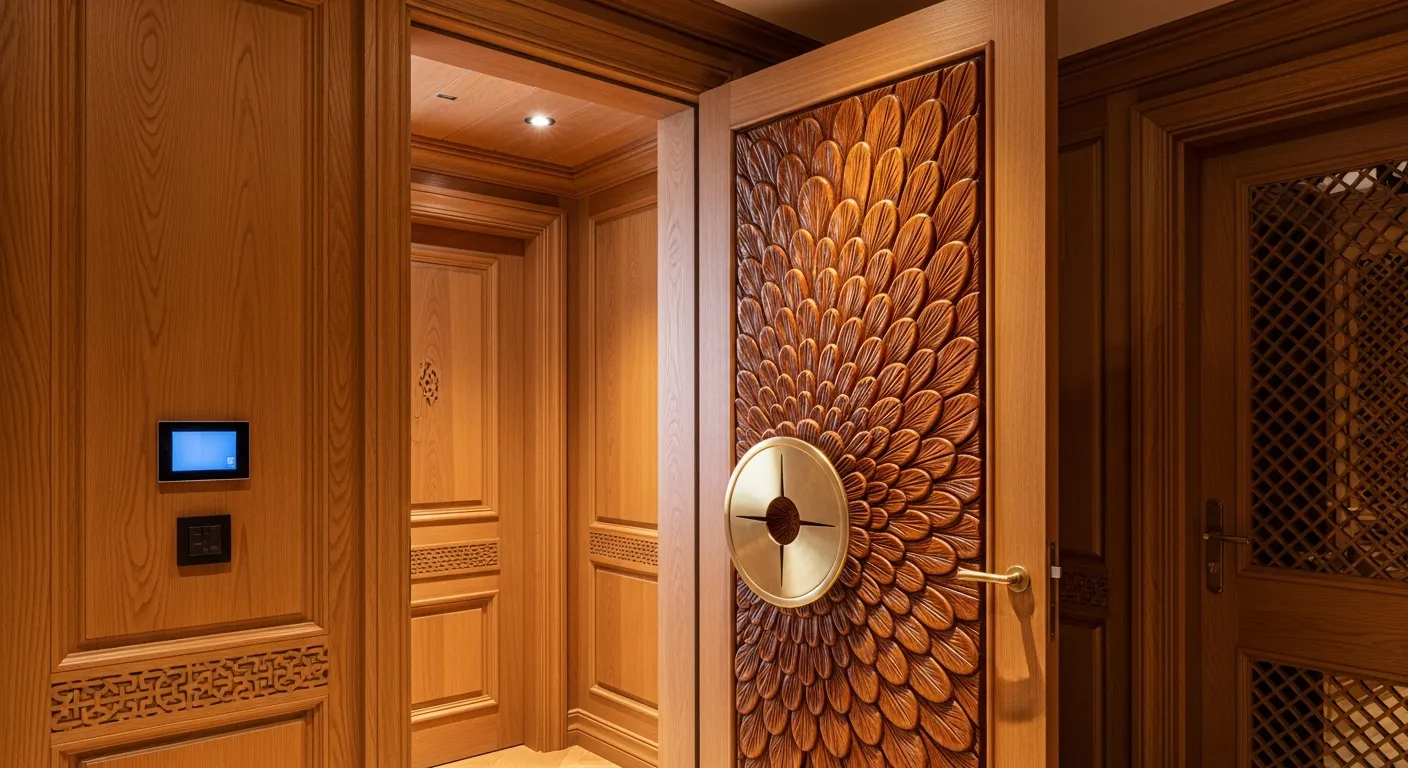
In high-end homes, oversized or particularly thick doors can create a sense of arrival, marking transitions between spaces in a subtle but powerful way. They add drama without relying on ornament.
On the other end of the spectrum, concealed doors use thickness to disappear entirely. Flush with the wall, carefully detailed, they maintain a seamless look that feels calm and uncluttered.
Both approaches use the same principle, just in very different ways. And both show that thickness isn’t just technical, it’s creative.
Choosing the Right Door Thickness for Your Home
So what should you actually choose? It depends.
The right thickness will vary depending on where the door is used, what it needs to do, and the conditions it’s exposed to. External doors generally benefit from added thickness to improve both insulation and security. Inside the home, spaces like bedrooms or offices often call for thicker doors to reduce noise and increase privacy. Climate also plays a part, with colder environments usually demanding better thermal performance.
Budget is another factor. Higher-performance doors tend to cost more, so it’s about balancing cost with benefit.
Installation is just as important. Even the best door will underperform if it’s poorly fitted. Gaps, misalignment, weak seals, all of these reduce effectiveness. A well-installed door, by contrast, can make even a modest design feel premium.
Future Trends in Door Design
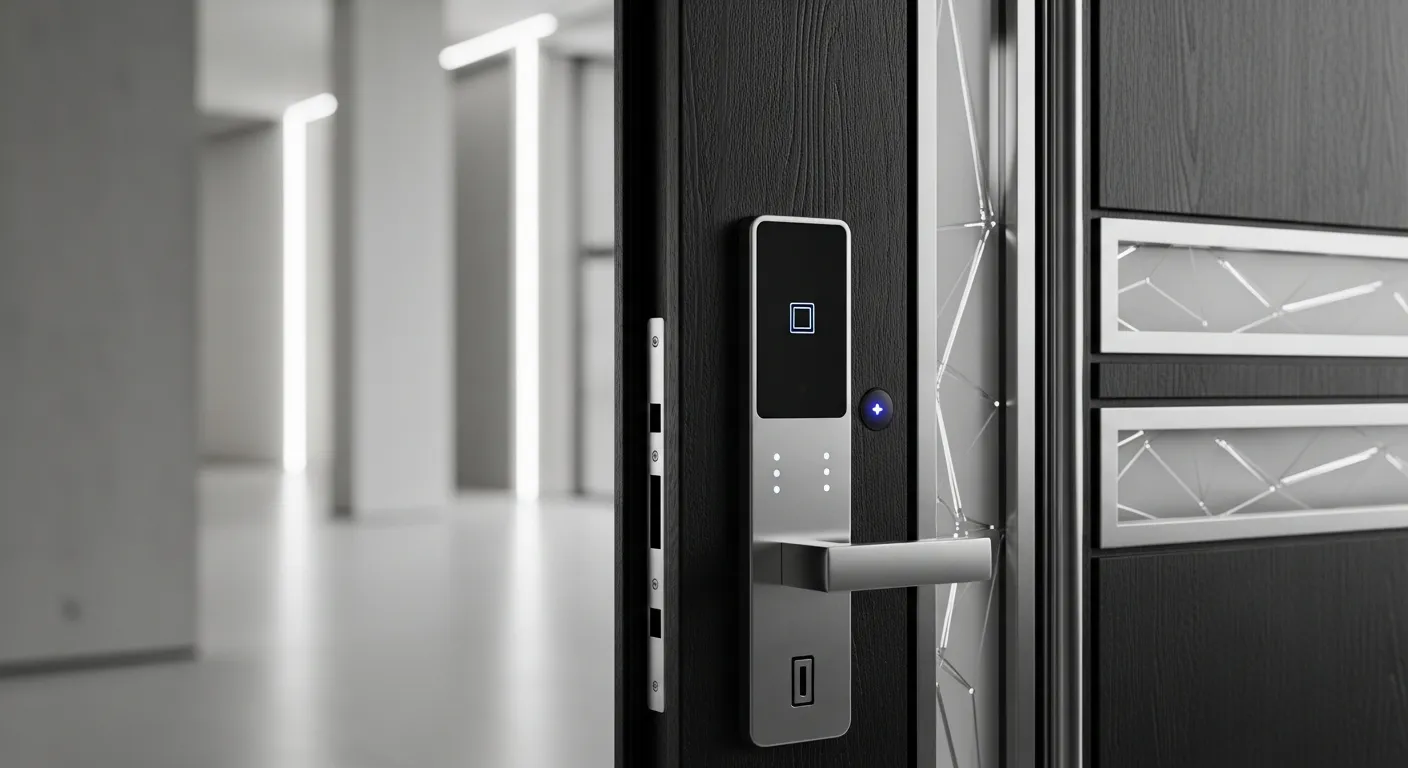
Doors are evolving. As expectations around comfort, efficiency, and sustainability grow, so too does the technology behind them.
We’re seeing a rise in high-performance composite doors with advanced insulating cores. Smart doors are beginning to integrate technology, access control, sensors, into their structure. And there’s a clear push towards more sustainable materials that balance performance with environmental impact.
Noise pollution, particularly in urban areas, is also driving demand for better acoustic solutions. Which brings us back to thickness, it remains central to how these innovations work.
Conclusion: Designing Beyond the Surface
It’s easy to think of doors as simple, functional elements. But look a little closer and there’s far more going on.
Thickness influences comfort, quietness, security, and the subtle way a space feels when you move through it. It’s both practical and perceptual.
For architects and homeowners alike, paying attention to this one detail can lead to smarter, more considered design choices. Because in the end, the depth of a door isn’t just physical, it shapes the entire experience of a space.

