

Your home should be a safe haven, but it could be harboring an invisible threat. Radon is a colorless, odorless radioactive gas that's impossible to detect without testing. Understanding how mitigation systems work is the first step toward protecting your family.
This guide draws on insights from SWAT Environmental, the nation's largest provider of total radon solutions. With highly trained technicians and cutting-edge mitigation technology, SWAT Environmental delivers safe, healthy air in homes across the country. Its expertise forms the foundation for exploring passive and active radon mitigation technologies.
What Is Radon and Why Should You Be Concerned?
Radon forms naturally from the breakdown of uranium in soil and rock beneath homes. The gas seeps into living spaces through cracks in foundations, gaps around pipes and other openings. Radon is a Class A carcinogen and the leading cause of lung cancer among non-smokers. The EPA estimates radon exposure causes about 21,000 lung cancer deaths in the United States each year.
The gas originates from the ground itself, not from building materials or maintenance issues. Radon tests can determine whether your home has dangerous levels, and any home can have elevated radon levels regardless of age, construction quality, or location. According to SWAT Environmental, "1 in 15 homes test positive for dangerous levels of radon," which means your neighbor's safe test results don't guarantee your home is safe, too.
Explaining Passive vs. Active Mitigation Systems
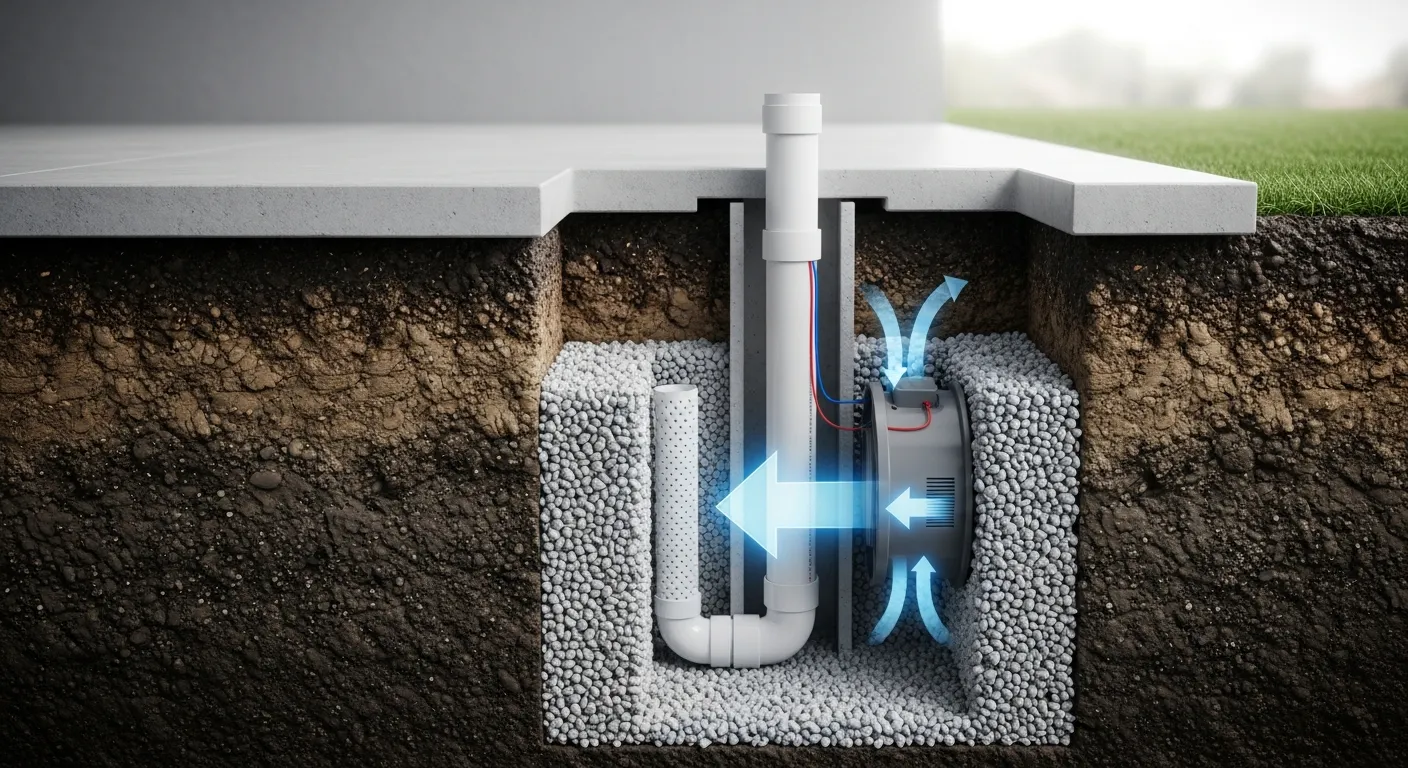
Understanding radon system types begins with recognizing how each approach moves gas away from living spaces. A passive system relies on natural pressure differences to vent radon from beneath the foundation to the outside air. This approach uses a pipe that runs from below the slab or basement floor through the roof. Temperature differences and air pressure create natural upward movement that carries radon gas out without mechanical assistance.
An active system adds a fan to the venting pipe. The fan pulls radon gas from beneath the home and expels it above the roofline, where it disperses safely. This mechanical component makes active systems more powerful and consistent.
Passive systems appear most often in new construction designed with radon-resistant features from the start. Active systems address radon problems in existing homes where testing reveals elevated levels. SWAT Environmental infers that “passive systems can be modified if radon gas levels increase," making the transition to active mitigation straightforward when needed.
Key Differences to Help You Choose
To conduct an effective radon mitigation system comparison, understanding your situation is key.
Effectiveness and Performance
Effectiveness represents the most critical consideration. A recent performance review of mitigation methods found that active systems can achieve reduction factors up to 5.5, while passive methods show more moderate results. Passive systems work well in homes with borderline levels or as preventive measures in new construction.
Cost Considerations
Passive systems cost less up-front because they don't require a fan or electrical work. However, if you're worried a passive system won't be effective enough, consider long-term value. Installing an active system from the start may prove more economical than upgrading later.
Best Applications for Each System Type
Passive systems can be easily integrated during construction, allowing builders to install piping before completing the foundation. Adding a passive system to an existing home requires more invasive work. Active systems serve as the standard solution for existing homes with confirmed radon problems. For homes with radon levels above 4.0 pCi/L, SWAT Environmental recommends contacting a qualified professional.
Maintenance, Noise and Energy Use
Passive systems need minimal attention beyond periodic testing. Active systems require monitoring the fan to confirm it runs continuously. Energy consumption for active systems remains low despite continuous operation, adding only a few dollars per month to your utility bills. Modern radon fans operate quietly when installed in attics or outside the home. Technicians need access to the attic for typical fan placement, as this location keeps equipment out of living spaces while allowing proper ventilation above the roofline.


