

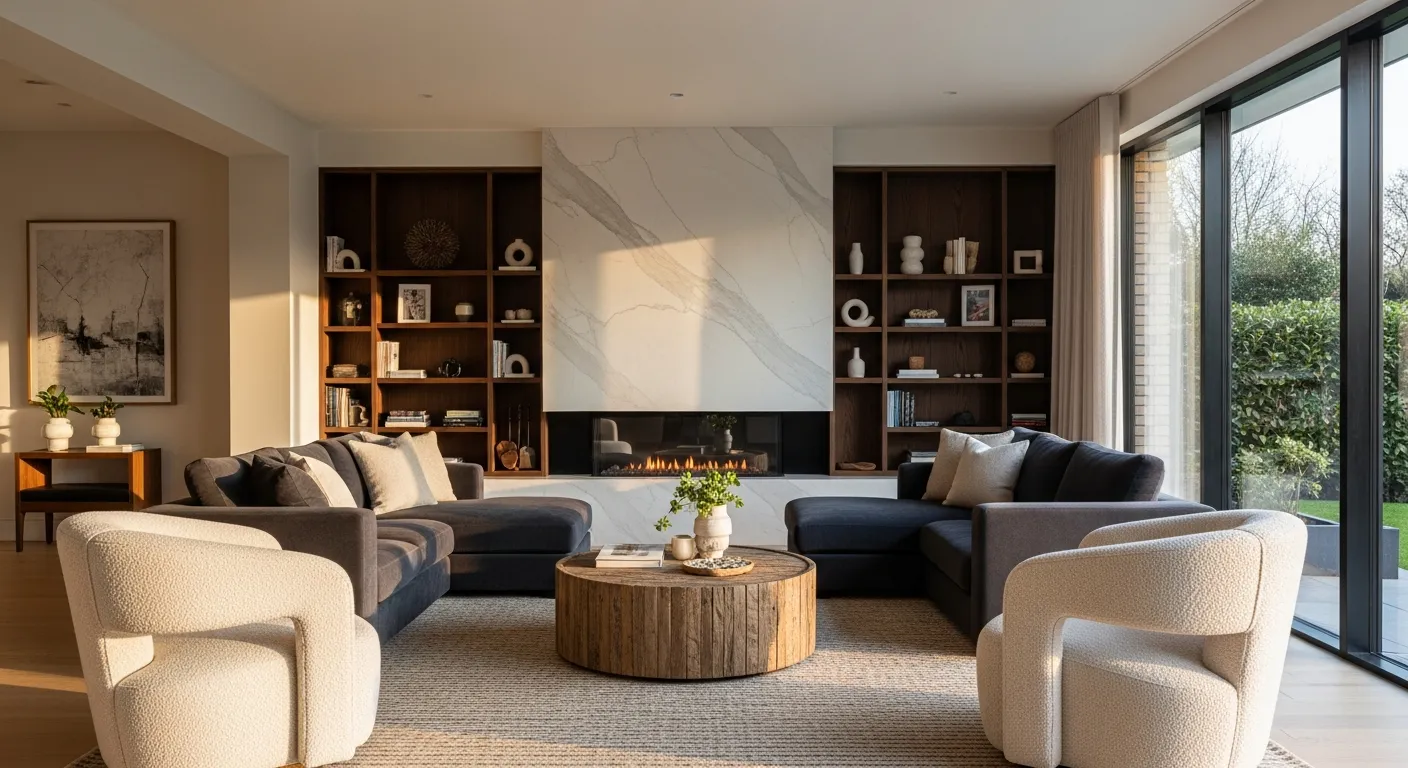
The role of the modern living room is rapidly changing away from TV as the central focus, with home and renter owners looking for designs that will allow for more comfortable conversation, increased functionality, and accommodating styles. Many contemporary interiors eschew the screen for a more prominent, striking architectural element, artwork, a fireplace, or a large window that draws people into the space and provides visual balance. This approach results in living spaces that are more welcoming, functional, and flexible, and allow a greater diversity of daily activities. Experts in the Houston property management field usually advise making a living room focus on something unique, as a well-designed interior will leave a more positive impression and lend more allure to rental properties, which will appeal to prospective tenants and bolster market value. But even the simplest furnishings can create a high-end atmosphere if the layout is carefully planned to allow them to complement each other both in terms of function and form.
5 Ways to Design a Living Room Around Alternative Focal Points
Highlight Architectural Features as the Centerpiece
Many San Jose property management experts will recommend staging furniture around a fireplace, exposed brick wall, built-in shelving, or large windows, since these are enduring features that invariably add point-of-sale value and beauty to an interior.
The architectural elements are visually anchored in the room and draw attention as soon as one enters the room. Chairs and accent chairs can be turned toward these permanent design elements, creating a balanced and welcoming area, as opposed to seating facing a television.
Fireplaces will naturally promote talking, and large windows will provide an outside view and increase natural light. The integrated shelves provide a space to showcase books, artwork, and decorative items, adding to the room's character while complementing the design.
| Did you know? | San Jose continues to rank among California's most expensive rental markets, with average apartment rents typically ranging from $2,600 to $3,700 per month. |
Create Conversation-Centered Seating Arrangements
Social interaction is one of the hallmarks of layouts with no televisions. Avoid seating in parallel rows, as this promotes isolation, restlessness, and activity.
An intimate gathering area can be created by arranging sofas, armchairs, and occasional seating around a center coffee table. Furniture should be spaced properly to provide for movement but still provide comfortable communication distances.
This setup also adds flexibility so that you can read, entertain, enjoy family time, or relax in peace in one room without having to constantly keep track of one focal device.
Use Statement Artwork to Define the Space
For a large living room, consider using large artwork to add personality, color, and interest in lieu of the television. The right painting, sculpture, or gallery wall can make a statement in its own right.
The artwork is surrounded by furniture, which enhances the composition and complements the decorative elements and seating. Wall sconces, picture lights, or strategic placement of floor lamps add to the focus on the lighting.
Artwork, as opposed to electronic displays, has an enduring impact on the room and can imbue it with personal style and enhance its overall look and appeal.
| Did you know? | Houston is one of the cheapest major cities in the U.S. to rent an apartment, with average rents ranging from $1,300 to $2,000. |
Strengthen the Layout with Layered Lighting
Focal points are an important aspect to set in a living room through lighting. Layered lighting adds depth and helps focus on a particular art, architectural design, or decorative display, rather than just relying on overhead lighting.
The use of table lamps, floor lamps, wall sconces, and accent lights creates a sense of hierarchy and ambiance. The warm lighting creates a cozy ambiance and accentuates the textures, materials, and carefully selected furnishings.
Well-planned lighting also improves functionality, enabling a variety of activities to take place all day long without a TV as the focus of visual attention.
Balance Decorative Elements with Functional Design
The key to successful living room layouts is to balance style and function. Ideas for accessories should be coordinated with and support the selected focal point. Furniture arrangements can be unified with the help of area rugs, side tables, plants, and textured fabrics, which help create visual balance in the space.
The use of natural materials like wood, stone, woven fibers, and linen adds warmth and texture, further enhancing the inviting atmosphere of the room. Indoor plants further help soften the architectural lines and reinforce the relationship between interior spaces and nature.
With intentional design, the living room space can be an adaptable space that can be both aesthetically refined and inviting for daily use.
End Point
Architectural elements, artwork, conversation spaces, layered lighting fixtures, and balanced décor are all features that can be used to create a living room that is a breath of fresh air from the TV. These carefully planned areas promote interaction, highlight design features, and feature timeless, functional, and beautiful interiors. Giving a home a sense of purpose with meaningful focal points is essential in today's changing home, providing added comfort, beauty, and value to the homeowner.


