

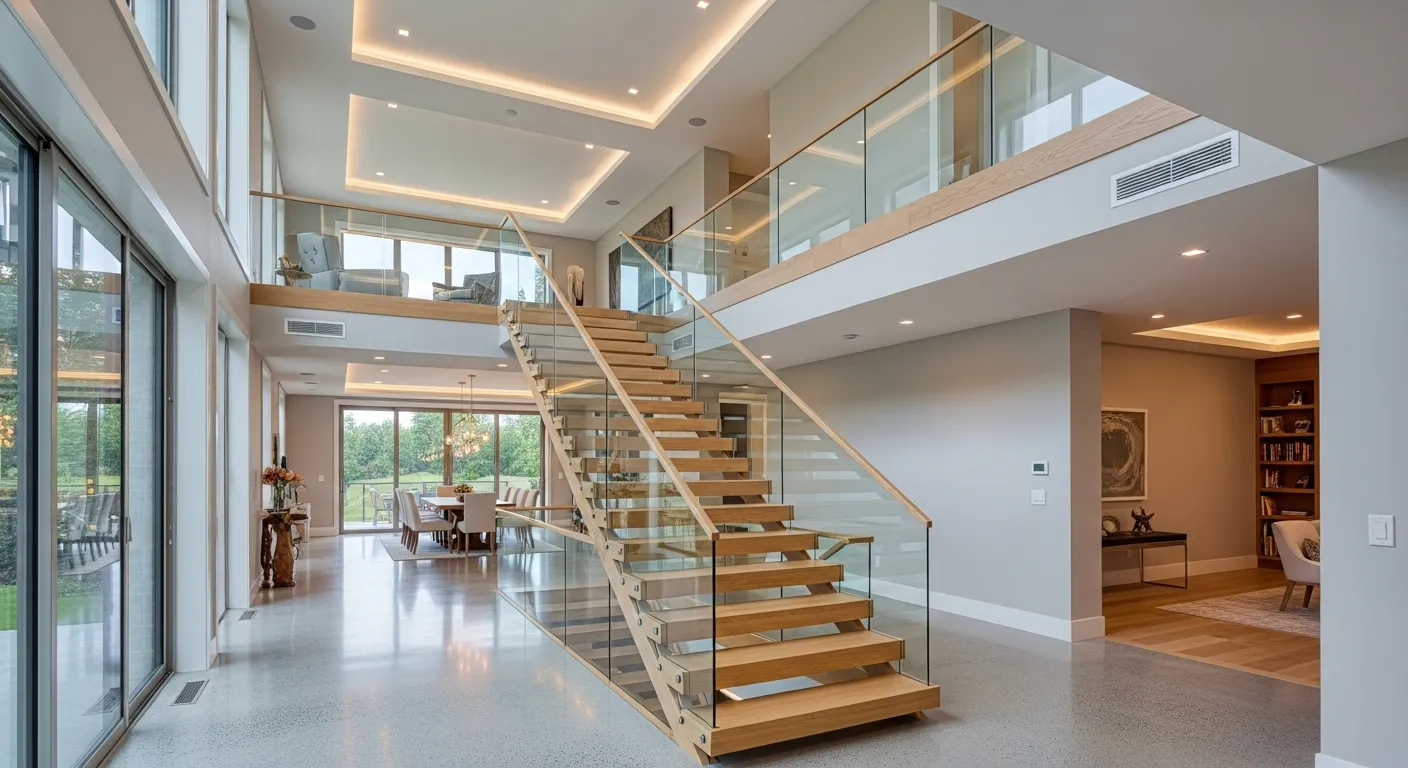
Not every home that feels "off" has a design problem. Sometimes the issue is harder to pinpoint. The kitchen looks great. The bedrooms are comfortable. The furniture suits the space. Yet walking upstairs feels strangely disconnected, almost like moving between two different homes.
This often happens after years of gradual updates. A family renovates the ground floor first. A few years later, the upstairs gets new flooring. Then comes a fresh coat of paint, new lighting, or replacement doors. Each decision makes sense at the time, but eventually the house starts telling several different stories at once.
The good news? Fixing that feeling usually doesn't require a major renovation.
The Most Important Spaces Are Often the Ones Nobody Decorates
Ask homeowners where renovation money usually goes and the answers are fairly predictable:
- Kitchen upgrades
- Bathroom remodels
- Bedroom makeovers
- New furniture
- Storage solutions
Very few people get excited about a landing. Or a staircase. Or the stretch of hallway connecting one room to another. Yet these are the areas everyone uses every day.
A staircase isn't just something that gets people upstairs. It sits in photographs. It frames views. It influences first impressions. In many homes, it is one of the first architectural features visitors notice without even realising it.
Try This Before Starting Another Renovation Project
Instead of walking into a room and judging the room itself, pause halfway up the stairs. Look around. Not at eye level. Look where the eye naturally wanders. Maybe it lands on a bright landing window. Maybe it follows a handrail towards the upper floor. Maybe it finds an old storage unit squeezed into a corner. These small details often explain why a home feels connected or why it doesn't.
Interior designers spend a lot of time discussing sightlines, but the basic idea is simple. People respond to what they see first. If movement through the home feels pleasant and uninterrupted, the entire property benefits.
The Staircase Doesn't Need to Be Fancy
One mistake appears repeatedly in renovation projects. Everything changes except the staircase. The walls are repainted. New flooring is installed. Lighting fixtures are upgraded. Furniture gets replaced. The staircase remains exactly as it was twenty years ago. Nobody notices immediately. Then one day it suddenly becomes impossible to ignore.
That doesn't mean a complete replacement is necessary. Often, modest updates have a surprisingly large impact. Popular improvements include:
- Replacing dated spindles
- Updating handrails
- Introducing lighter timber finishes
- Improving lighting around the staircase
- Using glass elements to reduce visual heaviness
For homeowners refreshing existing railings, a balustrade kit can provide a straightforward way to modernise the staircase while keeping it visually aligned with newer improvements elsewhere in the property.
The most successful staircase updates rarely become a talking point. Instead, they quietly stop the staircase from feeling like a leftover feature from another era.
Light Has More Influence Than Most People Realise
There is a reason estate agent always mention natural light. People respond to it instinctively. A staircase filled with daylight feels more open. A bright landing feels larger. A hallway with natural light at the far end naturally encourages movement.
The opposite is also true. Many older homes have staircases tucked into the darkest part of the property. During the day they can feel dim. In the evening they rely heavily on artificial lighting. The result is a subtle visual break between floors.
Simple changes can help:
- Roof lights above stairwells
- Larger landing windows
- Mirrors positioned opposite natural light
- Glass staircase panels
- Lighter paint colours
- Layered lighting instead of a single ceiling fixture
None of these changes alters the structure of the home. Yet they can completely change how the space feels.
Matching Is Overrated
For years, many homeowners chased perfectly coordinated interiors. The same flooring everywhere. The same paint colours. The same finishes from room to room. It looked organised, but often felt a little flat.
Today's interiors tend to feel more relaxed. Rather than matching everything, designers often repeat smaller details:
- Similar wood tones
- Consistent hardware finishes
- Repeating accent colours
- Familiar textures
- Related materials
A black metal detail that appears on a staircase might reappear on the lighting upstairs. The timber used on stair treads could appear again in shelving or furniture elsewhere. Most visitors never consciously notice these connections. They simply notice that the house feels right.
It's not really about decoration to improve the flow between floors. A home may seem more connected and welcoming from top to bottom with even little improvements like improved lighting, clear sightlines, coordinating materials, and a staircase that matches the inside.


