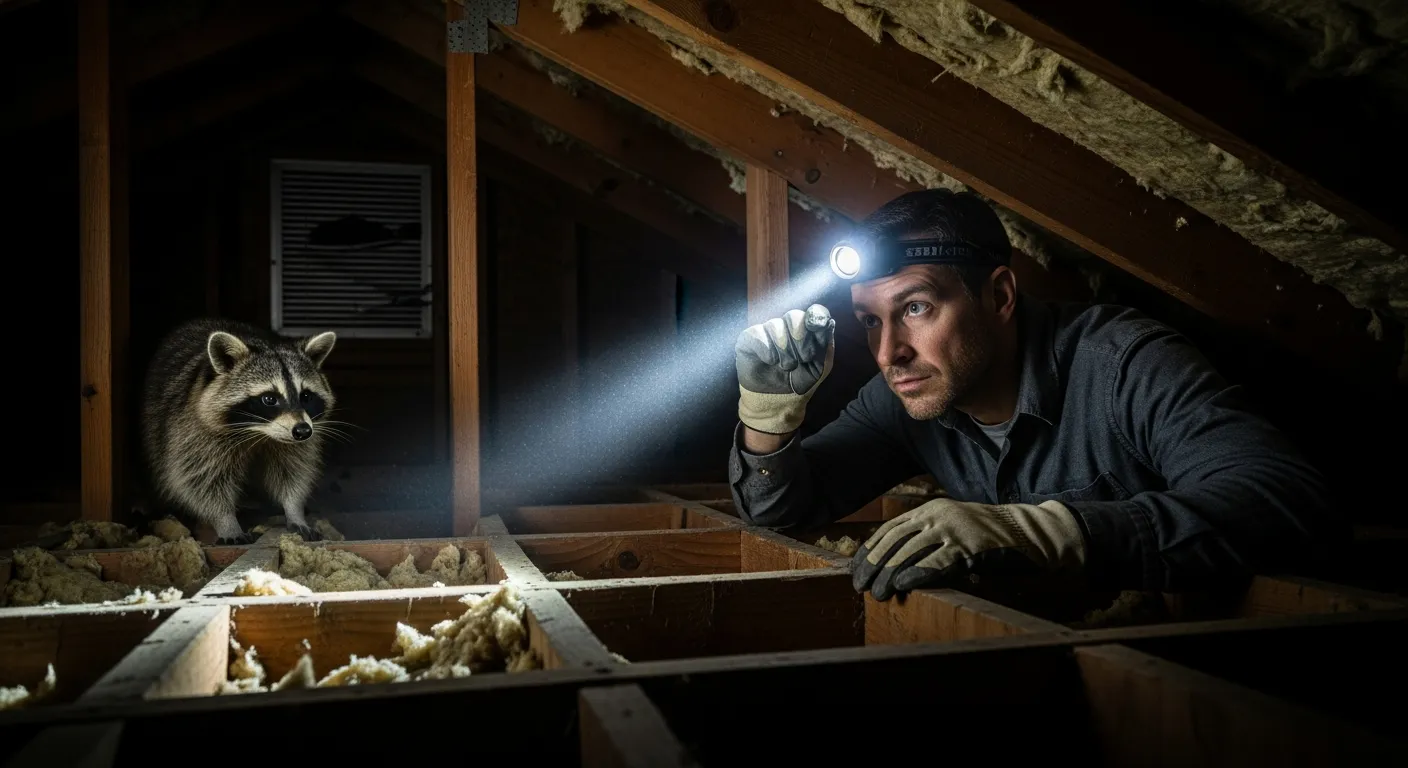
Raccoons slip into your home quietly through loose roof vents, uncapped chimneys or gaps in aging soffits. Once inside, they begin turning attics or wall cavities into nesting sites. The experience can be unsettling, partly because of the noise but also because of the potential unseen damage.
The Early Clues to Watch for
Raccoons tend to make a wide range of subtle sounds and signs, including nighttime scratching, faint movement overhead or unexplained odors that you might dismiss until the problem escalates.
Raccoons are also among the most destructive wild animals to have adapted to city life. Once inside your home, raccoons can leave behind additional warning signs such as torn insulation, roof damage and waste build up. In many cases, you only discover the infestation after visible deterioration appears.
What Kind of Damage Can Raccoons Cause to a House?
The damage is not limited to noise or nuisance – it often becomes a structural and sanitary issue, leading to damaged insulation, wires, wood beams and soffits. These issues may start small but escalate quickly as animals establish nesting areas. In severe situations, raccoons can rip away shingles or fascia boards to gain access to attics or wall cavities.
Contamination is also a concern. Waste buildup in enclosed attic spaces can create strong odors and lead to unsanitary conditions due to feces and urine. Over time, this turns a structural issue into a sanitation problem. In short, raccoon damage is rarely isolated and tends to affect multiple systems of the home at once.
Raccoon Removal Methods for Residential Properties
When you begin searching for solutions, your options typically fall into two main categories – do-it-yourself (DIY) methods or professional wildlife removal. Each approach comes with its own considerations.
DIY Trapping and Repellents
You can attempt to handle the issue yourself by using cage traps or deterrents, but doing that has its limitations. Raccoons are strong, adaptable animals, and recurring infestations are common if entry points remain open.
You might also get hurt. When raccoons feel trapped, they may become defensive. This is one of the reasons wildlife professionals often caution against unassisted removal.
Professional Wildlife Removal
This method addresses both the infestation and the conditions that caused it. Professional services often use a process that begins by identifying entry points and nesting areas, then employing removal techniques and cleaning up waste.
Many seal vulnerable access points to help prevent re-entry and reduce the likelihood of another infestation. This combined approach is especially important because raccoon problems are rarely one-time events.
Is It Safe to Remove a Raccoon Yourself?
It is not safe to remove a raccoon yourself. Raccoons are known to become defensive when threatened, particularly during nesting periods.
There is also a health concern, because raccoons may carry parasites and diseases. They are associated with rabies and raccoon roundworm, making DIY removal challenging and unsafe without proper training and equipment.
Why Prevention Matters
Once raccoons are removed, the long-term success of any solution depends on prevention. Urban Jungle emphasizes that eliminating food sources and sealing entry points are the most effective deterrents.
Common prevention measures are securing trash bins with locking lids, installing chimney caps and vent covers, repairing roof damage and removing outdoor food sources like pet bowls.
As Urban Jungle's prevention guide notes, raccoons are persistent because they are "opportunistic feeders, consuming a wide range of food items and often raiding garbage cans and gardens." As such, reducing those opportunities is key to long-term raccoon prevention.
When Professional Removal Is the Practical Option
Structured wildlife control is the most practical option for safety, sanitation and long-term prevention. Companies like Urban Jungle Wildlife Removal LLC offer a safe and effective way to deal with your raccoon problem by addressing the full scope of an infestation.
Its expertise is crucial because, as the team notes, "raccoons are not quiet house guests." All the trained professionals have biology degrees and know where to look for the subtle signs of nesting. This allows them to safely enter difficult or confined areas, such as crawl spaces and deep attics, where raccoons often cause "torn insulation, chewed wires and wood beams, damaged soffits and scratch marks."
This professional approach also prioritizes safety. Attempting to remove a raccoon yourself is risky, as they can become dangerous when they feel "trapped or need to protect their young." With Urban Jungle, you get the same technician from start to finish, ensuring a clear and consistent strategy.
Furthermore, the company focuses on a permanent fix. Its process includes a one-year warranty on sealed entry points because it recognizes that raccoons are "opportunistic feeders, consuming a wide range of food items and often raiding garbage cans and gardens." By not charging per animal or per trip and ensuring the animal is fully removed, Urban Jungle aims to provide a reliable, long-term solution.
Resolving Raccoon Infestations Long-Term
A single action rarely solves raccoon infestations. The most reliable solution is a combined approach of inspection, humane removal, sanitation and prevention. That is why professional and full-service wildlife control is so important. It addresses the full problem, from entry to exit to prevention. When dealing with an animal as adaptable as a raccoon, the goal is not just removal. It is ensuring your home does not become an open invitation again.