

A refrigerator is one of the few appliances in your home that never gets a day off. Unlike most household equipment, it operates around the clock to keep food safe, preserve groceries, and maintain a consistent temperature regardless of what's happening outside. Because it works continuously, even small maintenance issues can gradually reduce its cooling performance without homeowners noticing.
In Atlanta, refrigerators often face additional challenges. Long summers, high humidity, and frequent grocery shopping during warmer months mean the appliance works harder to maintain safe temperatures. Every time the door opens, warm air enters, forcing the cooling system to cycle more frequently. Over time, that extra workload can affect both efficiency and longevity if regular maintenance is overlooked.
The encouraging news is that most cooling problems develop gradually rather than appearing overnight. By understanding how refrigerators lose efficiency and adopting a few simple maintenance habits, homeowners can often extend the lifespan of their appliance while avoiding unnecessary repair costs.
Key Takeaways
- Regular maintenance helps refrigerators cool more efficiently.
- Poor airflow and dirty components force the cooling system to work harder.
- Small changes in performance often indicate developing problems.
- Proper food storage can improve airflow inside the refrigerator.
- Professional diagnosis is recommended when cooling problems continue after routine maintenance.
Why Refrigerators Gradually Lose Cooling Performance
Most refrigerators don't suddenly stop cooling. Instead, efficiency slowly declines over months or even years as components experience normal wear. Because these changes happen gradually, many homeowners simply adapt to them without realizing the refrigerator isn't performing as well as it once did.
Continuous Operation Creates Wear
Unlike many household appliances, a refrigerator rarely gets a break. Compressors, evaporator fans, condenser fans, and thermostats operate continuously to maintain stable temperatures. Over time, this constant workload naturally causes components to become less efficient.
Dust and Restricted Airflow
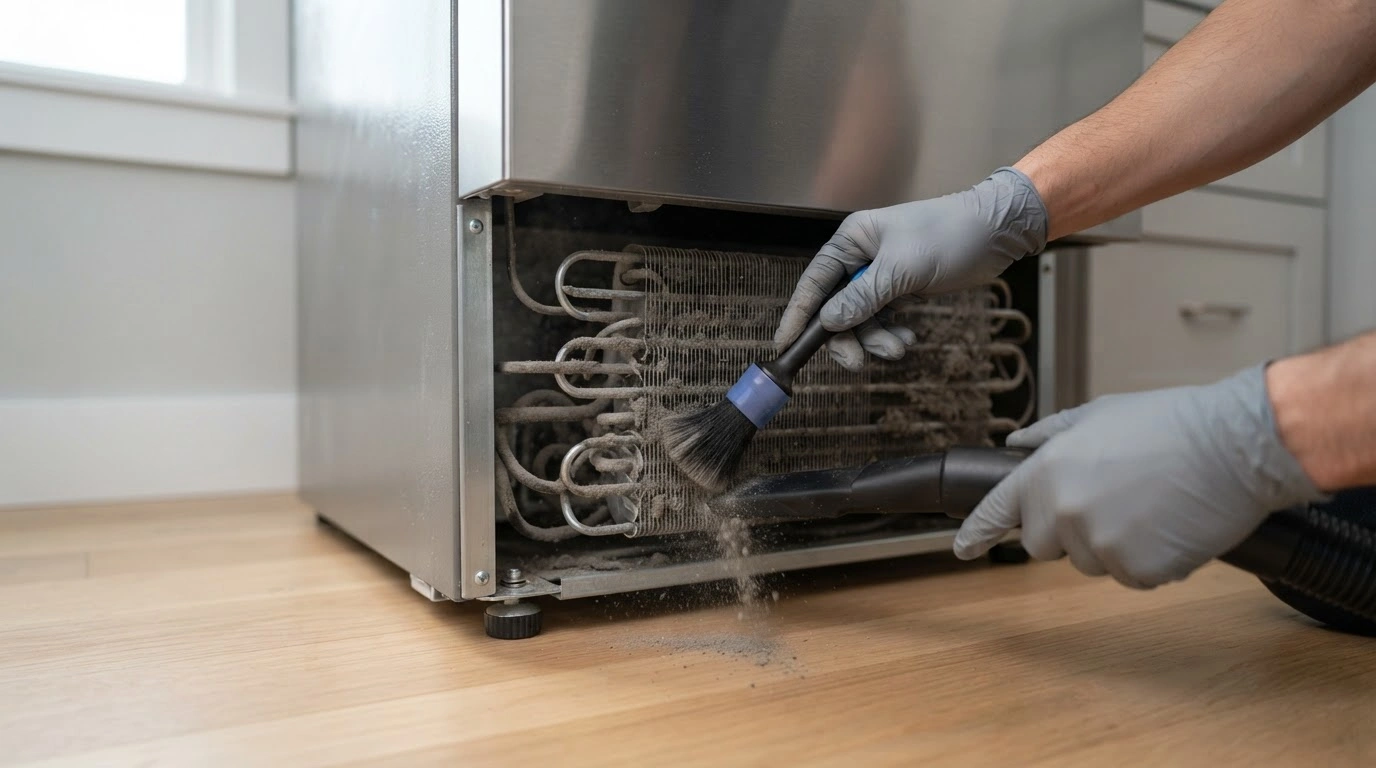
One of the biggest reasons refrigerators lose efficiency is restricted airflow. Dust collecting on condenser coils or blocked air vents forces the system to work longer to remove heat, increasing both energy consumption and wear on important components.
Everyday Habits That Help Refrigerators Last Longer
Many refrigerator problems can be prevented through small adjustments to everyday habits. These changes require very little effort but can significantly improve cooling performance over time.
Don't Overfill the Refrigerator
A refrigerator needs space for cold air to circulate between shelves. Packing groceries too tightly restricts airflow, causing some areas to become warmer while forcing the cooling system to run longer.
Keep Interior Vents Clear
Food containers placed directly in front of interior vents can block cold air from reaching every compartment. Leaving these vents unobstructed helps maintain consistent temperatures throughout the appliance.
Store Leftovers Safely Without Blocking Airflow
Hot food doesn't need to sit on the counter until it reaches room temperature. Large portions should instead be divided into smaller, shallow containers so they cool more quickly in the refrigerator. Avoid packing those containers tightly around interior vents, since cold air still needs room to circulate.
Advice From an Experienced Appliance Technician
While researching refrigerator maintenance, I spoke with Chris, an experienced technician at Appliance EMT, about the cooling problems he encounters most frequently in Atlanta homes. According to Chris, many expensive repairs begin with simple maintenance issues that homeowners overlook for months.
Dirty condenser coils, worn door gaskets, blocked airflow, and inconsistent temperature settings are among the most common causes of declining cooling performance. These issues often place additional stress on the compressor, causing it to run longer than necessary.
Chris also explained that GE refrigerators can develop cooling problems that aren't always obvious from the symptoms alone. When routine maintenance doesn't correct recurring temperature issues, homeowners may need professional GE refrigerator repair in Atlanta to determine whether the problem involves airflow restrictions, temperature sensors, evaporator fans, electronic controls, or another component within the cooling system.
Cooling Problems That Shouldn't Be Ignored
Most refrigerators provide warning signs before experiencing a complete failure. Recognizing these symptoms early often leads to simpler repairs and helps prevent food spoilage.
Uneven Cooling Between Shelves
If drinks stay cold on one shelf while vegetables spoil quickly in another compartment, restricted airflow or fan problems may be developing.
Frost Appearing Where It Shouldn't
Excess frost inside the freezer or around vents can indicate airflow restrictions, door seal issues, or problems within the defrost system.
Water Collecting Around the Refrigerator
Water on the floor isn't always caused by a plumbing issue. Clogged defrost drains or blocked drainage channels commonly allow water to accumulate beneath the appliance.
Unusual Operating Sounds
Buzzing, clicking, rattling, or longer compressor cycles often indicate that components are working harder than they should.
Maintenance Tasks That Make the Biggest Difference
Routine maintenance doesn't require advanced technical knowledge. A few simple tasks performed throughout the year can noticeably improve refrigerator performance.
Clean Condenser Coils
Condenser coils release heat from the cooling system. Dust buildup reduces their efficiency, causing longer operating cycles and higher energy consumption.
Inspect Door Gaskets
Door seals should close tightly all the way around. Cracked, loose, or damaged gaskets allow warm air to enter continuously, forcing the refrigerator to compensate.
Check Temperature Settings
Keep the refrigerator at 40°F or below for food safety; many refrigerators perform well in the 35–38°F range. The freezer should be kept around 0°F. Because control-panel settings don't always show the actual compartment temperature, an inexpensive appliance thermometer can provide a more reliable reading.
Leave Space Around the Appliance
Refrigerators need adequate ventilation behind and around the unit to release heat efficiently. Crowding the appliance against walls or cabinets can reduce cooling performance.
Common Mistakes That Shorten Refrigerator Lifespan
Many cooling problems aren't caused by faulty components but by habits that gradually increase wear.
- Ignoring dirty condenser coils for years.
- Frequently leaving the refrigerator door open.
- Blocking interior air vents with groceries.
- Setting temperatures colder than necessary.
- Waiting until cooling performance becomes noticeably poor before investigating the cause.
Avoiding these habits helps the refrigerator operate more efficiently while reducing long-term stress on major components.
When Routine Maintenance Isn't Enough
Basic maintenance solves many common problems, but certain situations require professional diagnosis.
Professional inspection is recommended when-
- Cooling remains inconsistent after cleaning and basic maintenance.
- The compressor runs almost constantly.
- Error codes continue appearing.
- Water leaks return repeatedly.
- Electrical or electronic control issues are suspected.
Continuing to operate the refrigerator under these conditions may increase repair costs if underlying problems worsen.
Last Thoughts
Keeping a refrigerator running efficiently isn't about complicated maintenance routines—it's about consistency. Simple habits such as keeping condenser coils clean, allowing proper airflow, checking door seals, and responding to early warning signs can significantly improve cooling performance while extending the appliance's lifespan.
As Chris from Appliance EMT pointed out, many major refrigerator repairs begin with issues that seem minor at first. Addressing cooling problems early, rather than waiting until the refrigerator stops working completely, gives homeowners the best opportunity to protect both their appliance and the food it stores.


