

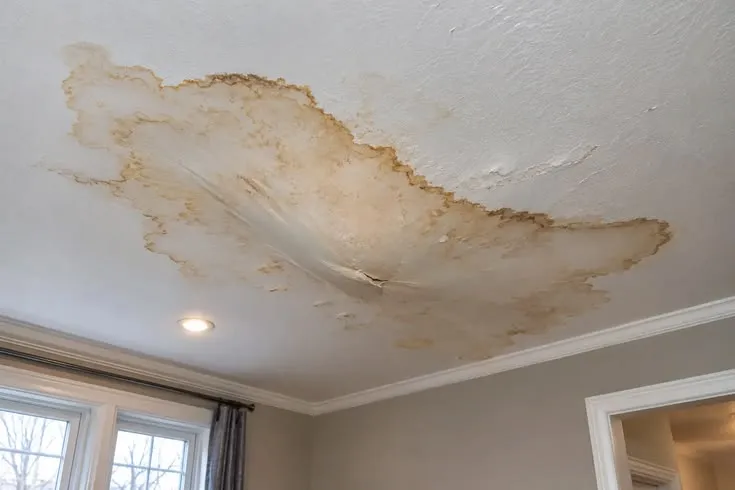
Water damage to the ceiling could happen for multiple reasons, such as leaky roofs, plumbing issues, or poor ventilation. Hence, to prevent the problem, work on the root cause of the problem. Signs of damage can include stains, mold growth, or peeling paint. The challenge is that by the time a brown ring shows up on your ceiling, the drywall above it has usually been wet for weeks. That is why I treat the attic and do the roof job first, then the ceiling job last. Here is the order I would work through.
Check the Attic Twice a Year
Most guides open with gutters. I start with the attic because that is where a ceiling leak begins, long before it reaches your paint. Go up with a flashlight in spring and fall, ideally the day after a hard rain. Look at the underside of the roof deck and around plumbing vent pipes, chimneys, and recessed light housings. Dark rings on the wood, damp insulation, or a pinpoint of daylight all indicate trouble.
Wet insulation is the worst offender. It stops insulating and keeps moisture against the drywall for days.
Fix Small Roof Problems Before They Turn Big
Water rarely comes through a hole you can see from the yard. Cracked pipe boots, tired flashing, and a few lifted shingles do most of the damage. Our piece on why your roof leaks more in winter and spring walks through the hidden causes behind that pattern.
A tube of roofing sealant is a stopgap, not a repair. If the boot or flashing is cracked, replace the part.
Keep Gutters Clear
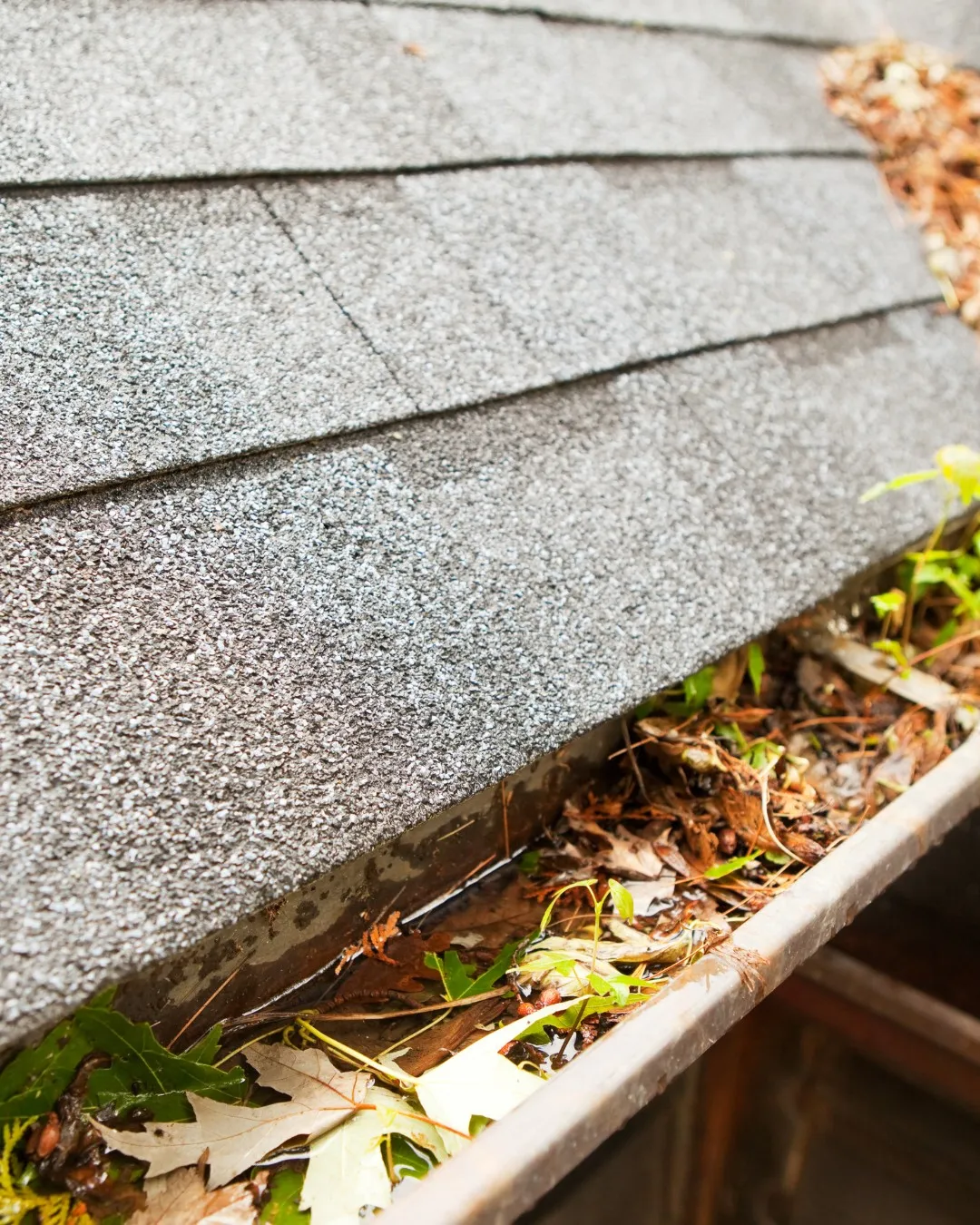
Clogged gutters push water back under the shingle edge, and it runs down the framing to the ceiling line. I clean them at least twice a year, and more often with overhanging trees. Gutter guards help, but they come with a tradeoff: they reduce how often you clean, but they don't eliminate it, because fine debris still builds up on top. The benefits of installing gutter guards are worth weighing against that.
Deal With Ice Dams If You Get Real Winters
Ice dams are a classic cause of ceiling leaks in snowy states. The Minnesota Department of Commerce names warm air leaking into the attic as the primary cause. That heat melts the underside of the snow, the water refreezes at the eaves, and the dam backs water up under the shingles. Its fix is to seal the leaks with caulk or spray foam and bring attic insulation to at least R-50 where space allows. R-50 suits cold climates, so check your own zone first.
Here is the part that surprises people. The same guidance says adding roof vents, even powered ones, will not eliminate ice dams and often makes them worse. Skip chipping at the ice from a ladder too. It is dangerous, and it damages shingles.
Watch the Plumbing and Appliances Above the Ceiling
Upstairs bathrooms, supply lines, water heaters, and attic air handlers all sit over a ceiling somewhere. A clogged AC drain line can overflow its pan and soak the drywall below without a drop of rain. If something seems off, our warning-signs checklist for plumbing problems that need immediate attention is a good reference.
Control Humidity and Ventilation
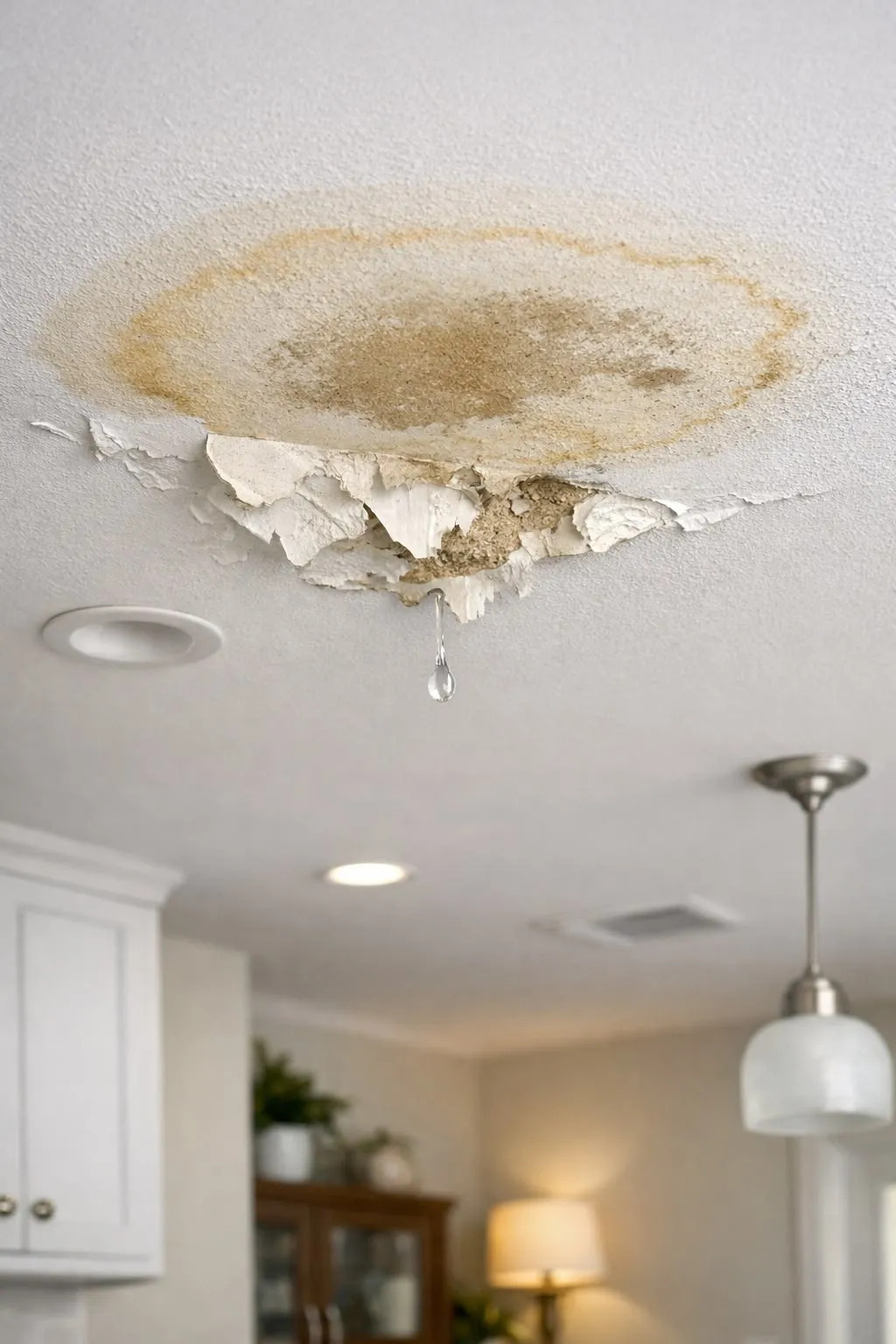
Warm, moist air that reaches a cold attic condenses on the roof deck and, over one winter, can leave the same stain as a roof leak. Bathroom fans should vent outdoors, never into the attic. The attic needs intake at the soffits and an exhaust at the ridge. These hidden ventilation flaws show how often that setup goes wrong.
If a Stain Appears, Move Fast
Fix the source first, then dry the area. The EPA advises drying water-damaged areas within 24 to 48 hours to prevent mold, and warns that cleanup alone will not help if the water problem stays. A stain that grows between checks, a sagging patch, or a bulge means water is pooling. Stay out from under it and call a pro. For the wider picture, see our guide to the top causes of residential water damage.
