

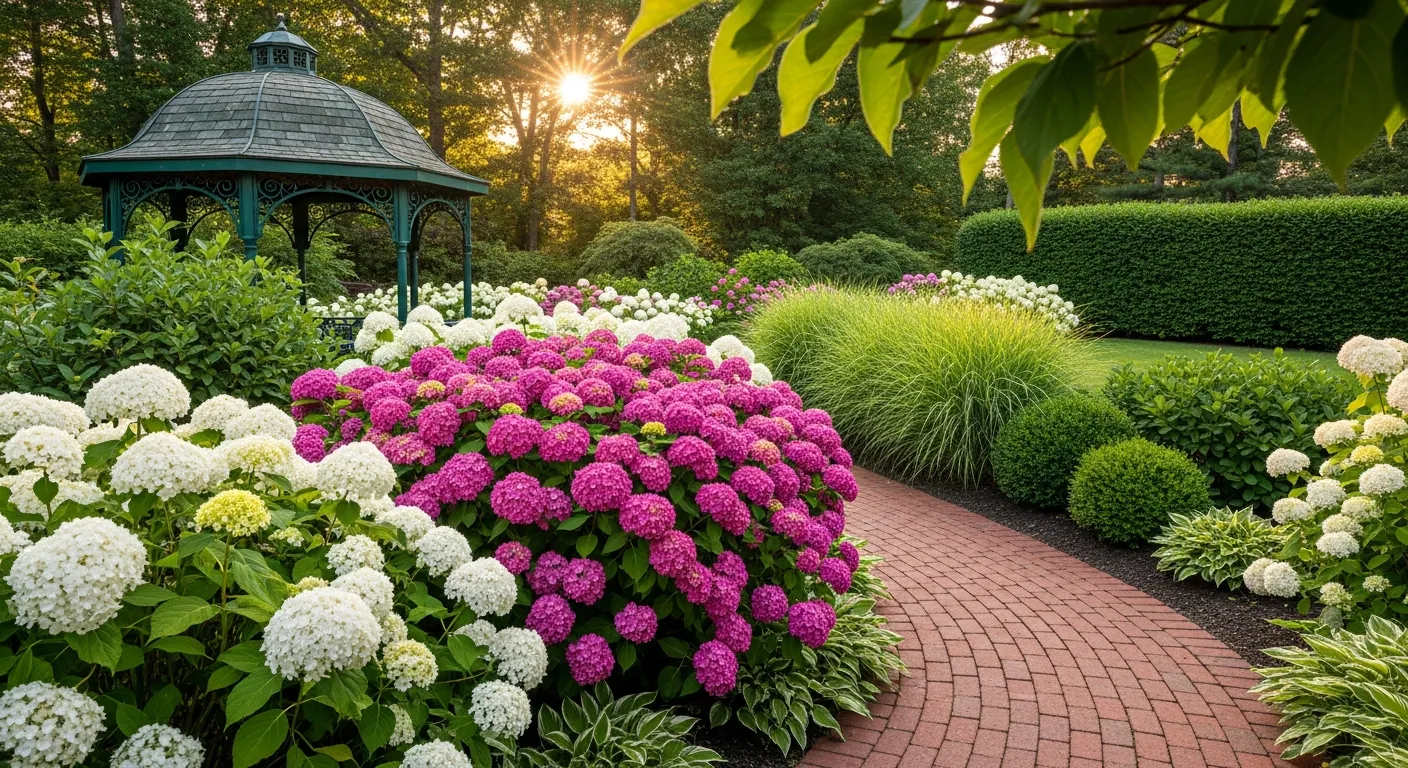
Hydrangeas are one of the most popular flowering shrubs in home gardens, known for their large, showy blooms and lush green foliage. With the right care, they can bloom beautifully from late spring through summer and even into fall, depending on the variety.
Whether you’re growing them in the ground or in containers, understanding the basics of hydrangea care will help you keep your plants healthy and vibrant.
Types
Before learning how to care for hydrangeas, you need to know that different types have slightly different needs. Common types include:
-
Bigleaf hydrangea: Known for its large mophead or lacecap flowers and its ability to change color based on soil pH, appearing blue in acidic soil and pink in more alkaline conditions. It is less cold-hardy than other types and may need winter protection in colder regions.
-
Panicle hydrangea: It produces cone-shaped flower clusters and is more tolerant of full sun and colder climates. This makes it one of the easiest hydrangeas to grow, especially for beginners.
-
Smooth hydrangea: Known for being extremely cold-hardy and reliable. It produces large round blooms and tends to recover well even after harsh winters, making it a dependable choice in cooler regions.
-
Oakleaf hydrangea: Stands out for its distinctive oak-shaped leaves, which turn beautiful shades of red and bronze in the fall. It also produces long-lasting flower clusters and adds ornamental value beyond just its blooms.
Light
Hydrangeas generally prefer a balance of sun and shade rather than extremes. In most gardens, morning sun with afternoon shade provides the best results. This gives the plant enough light to support strong flowering while protecting it from the harsh heat of the afternoon.
For ground-planted hydrangeas, location matters most. Once planted, they rely entirely on the surrounding environment, so choosing the right spot from the beginning is important. Too much direct sun can lead to wilting or scorched leaves, while too much shade may reduce flowering.
Potted hydrangeas offer more flexibility because they can be moved throughout the day or season to follow changing light conditions. In areas with limited natural sunlight, growth can be supported using artificial lighting such as LED grow lights, especially during winter or indoor growth.
Watering
Hydrangeas prefer consistently moist soil, but they do not do well in waterlogged conditions. The goal is to maintain even moisture so the roots never fully dry out, particularly during active growth and flowering periods.
During hot weather, dry winds, or peak summer months, watering needs increase significantly. Container-grown hydrangeas usually dry out faster than those planted in the ground, so they often require more frequent attention.
Deep watering is generally more effective than light watering. It encourages the roots to grow deeper into the soil, which improves the plant’s overall stability and drought tolerance over time.
Soil
Hydrangeas grow best in soil that is rich in organic matter, loose in structure, and able to retain moisture without becoming soggy. Good soil is one of the most important factors for long-term plant health.
Adding compost or well-rotted organic material improves both nutrient availability and drainage. This helps the plant establish a stronger root system and produce more consistent blooms each season.
Heavy clay soil should be avoided or improved, as it tends to hold too much water and can increase the risk of root rot. In poor soils, raised beds or soil amendments can make a significant difference.
Fertilizing
Hydrangeas are not heavy feeders. A balanced, slow-release fertilizer applied in early spring is usually sufficient to support healthy growth and flowering. This provides steady nutrition during the most active part of the growing season.
Too much fertilizer, especially high-nitrogen formulas, often results in lush green foliage but fewer flowers. To avoid this, feeding should remain moderate and consistent rather than excessive. By mid to late summer, it’s best to stop fertilizing so the plant can naturally slow down and begin preparing for dormancy.
Pruning
Pruning hydrangeas depends on the variety, which is why timing matters. Some hydrangeas bloom on old wood, while others bloom on new wood. Because of this, cutting at the wrong time can reduce or even eliminate flowers.
As a safe approach, remove dead or weak stems in early spring and avoid heavy pruning unless you are certain of the type you’re growing. Panicle and smooth hydrangeas are more forgiving, while bigleaf and oakleaf types require more caution.
Final Thoughts
Hydrangeas are highly rewarding plants that bring structure, color, and seasonal interest to almost any garden. Once you understand their basic needs, they become relatively easy to manage and reliably beautiful year after year.


