

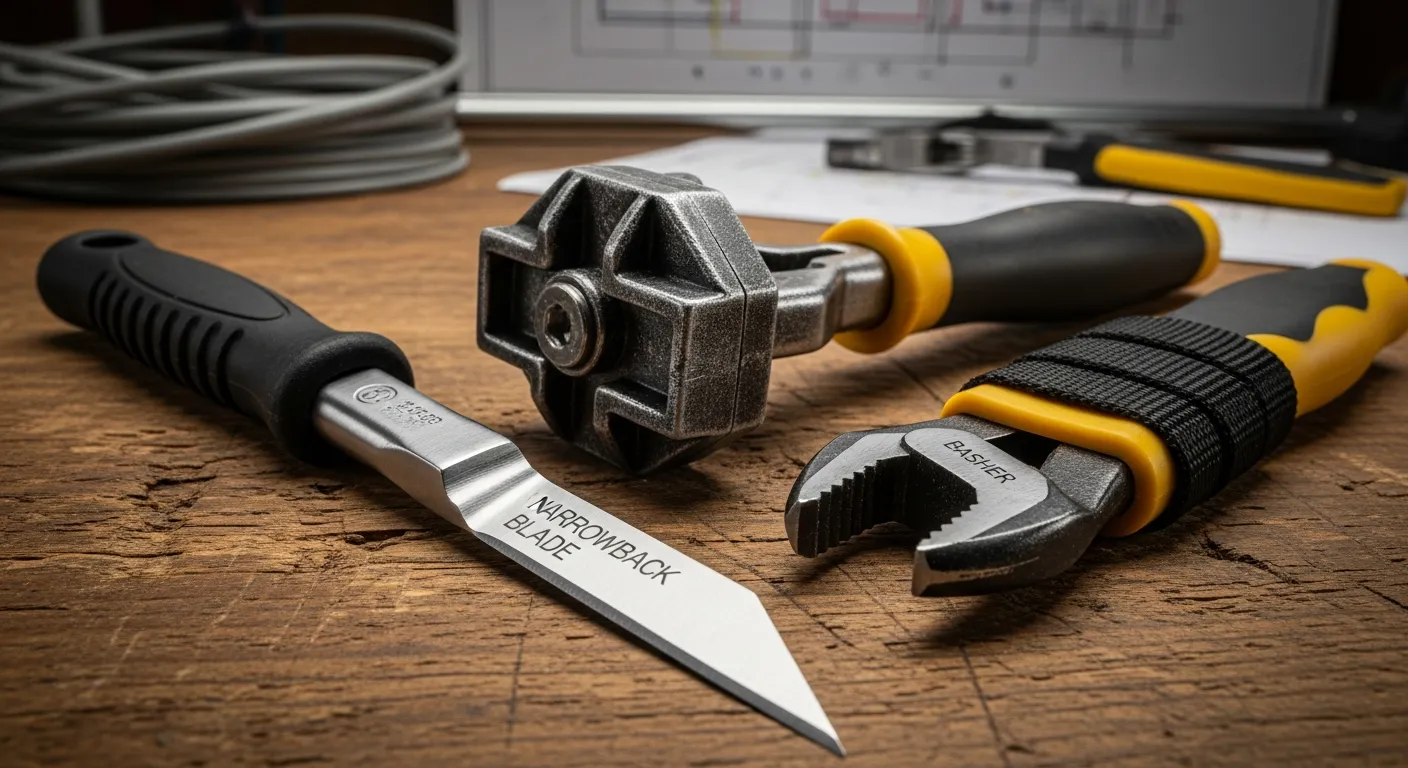
Most people have a pretty clear picture of what an electrician carries to work. Wire cutters, pliers, screwdrivers, a voltage tester – those all make sense. But spend a day with an experienced electrician, and you’ll probably spot a few tools you weren’t expecting.
The reality is, electrical work involves much more than connecting wires. Electricians often find themselves opening panels, working in tight spaces, loosening stubborn fittings, or making small adjustments that call for specialized tools. Over time, many develop a kit that’s tailored to the kind of jobs they do most often.
Keep reading on to learn the three tools that might not be the most obvious, but they regularly earn their place in an electrician’s bag.
1. The Narrowback Blade
A knife is one of those tools that’s constantly in use on a job site. It isn’t just for opening boxes or cutting packages. Electricians use knives to strip cable jackets, trim insulation, score materials, and handle dozens of small jobs throughout the day.
That’s why many prefer blades designed specifically for precision work rather than a standard utility knife. The slimmer profile makes it easier to work in confined spaces. It also gives greater control when making careful cuts around wiring and electrical components.
Many professionals choose the MKC electrician’s blade. Why? Because it’s designed with these everyday tasks in mind. It offers the durability and precision needed for repeated use on demanding job sites.
2. The “Basher”
Despite the name, this isn’t simply a hammer. In fact, it’s not even a hammer in some cases – it’s a flathead screwdriver.
A basher is built to take the knocks that come with everyday construction work. Whether it’s tapping conduit into place, helping loosen stubborn fittings, or dealing with materials that need a little persuasion, it’s typically the tool electricians reach for when a standard hammer isn’t quite the right fit.
It’s one of those tools that proves its value through experience. New electricians may not realize how often they’ll use it, but seasoned tradespeople rarely leave it behind.
Having a dependable striking tool nearby saves both time and frustration when working on busy job sites.
3. The Non-Marring Strap Wrench
Some parts need plenty of force to tighten or loosen – but they also need to stay free from scratches and dents.
That’s where a non-marring strap wrench comes in.
Instead of gripping with metal teeth, it uses a flexible strap to apply pressure around the outside of an object. This makes it ideal for several tasks. Working with finished surfaces, for example, as well as conduit fittings and lighting components. Basically, any material that shouldn’t be damaged.
It’s not a tool that gets used on every job. But when it is needed, there’s usually no better alternative.
To conclude, an electrician’s tool bag is typically built through experience – years and years of experience. It’s not just a one-and-done experience. The items listed above might not be the first to come to mind, but they are the ones that professionals rely on most often.


