

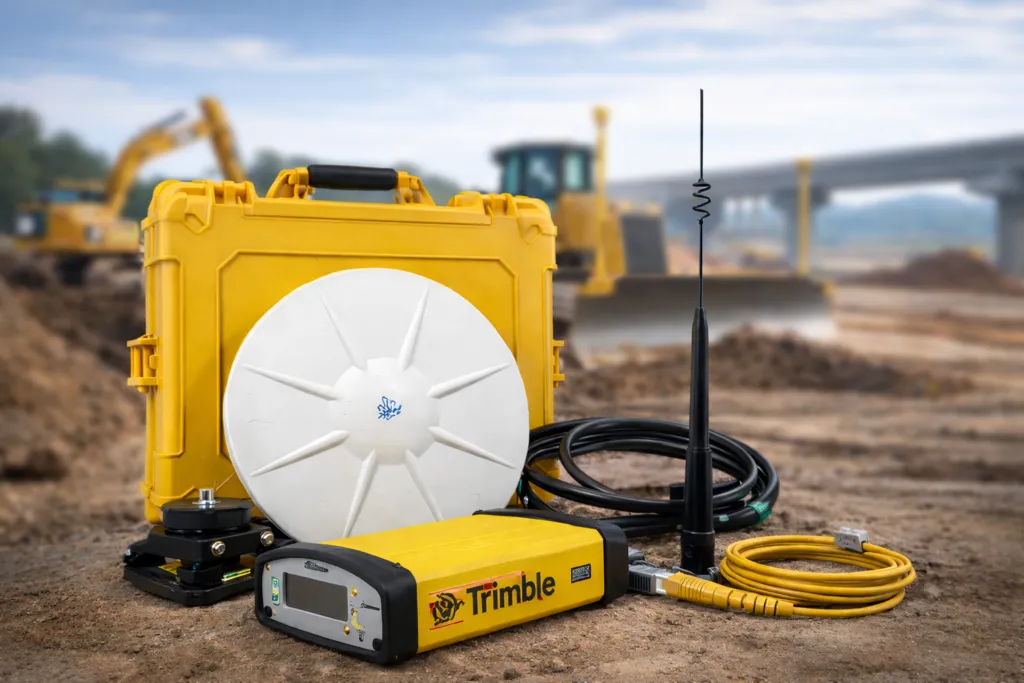
If you want to sell Trimble equipment, start with a simple question: Do you want the widest exposure, or do you want the cleanest sale? Those are not the same thing.
Trimble equipment covers a wide range of products. One contractor may be selling an SPS855 base station. Another may have a TSC7 controller, an S8 total station, a CB460 display, or a machine-control package with antennas, cables, brackets, and mounting hardware. Those products do not move through the market in the same way. A clean, complete rover kit is one kind of sale. A field-worn grade-control package is another.
That is why the selling channel matters. A broad marketplace gives you reach, but it also gives you more work. An authorized dealer may be a good fit for newer equipment with a clear support story, but that route can be more selective. A specialist buyer often makes more sense for contractors who want a direct quote, less back-and-forth, and a buyer who already understands jobsite technology.
For U.S. HDD contractors, utility contractors, and equipment owners, the best answer is often the simplest one: work with a buyer that understands contractor equipment, can evaluate real field condition, and does not need to be educated about every part in the package. That is where UCG stands out. Contractors do not need another long sales process. They need a clear one.
What counts as Trimble equipment when you are ready to sell?
Many sellers say they want to sell “used Trimble GPS.” That is too narrow. In the resale market, Trimble equipment usually falls into four groups: GNSS base and rover receivers, data collectors and controllers, total stations, and machine-control or site-positioning systems.
The first group includes the equipment many contractors know best: base stations, rovers, and full RTK kits used for layout, positioning, and field work. The second group includes controllers such as the TSC7 and other field computers used to run Trimble workflows. The third group covers total stations, including older units that may still have value if they are complete and serviceable. The fourth group is where many construction sellers get overlooked. That group includes grade-control displays, cab kits, antennas, correction-ready hardware, and systems used with products such as Siteworks and Earthworks.
This matters because not every selling channel treats those categories the same way. A survey-focused buyer may want a controller and receiver, but not a machine-control package. A general marketplace may accept everything, but that does not mean it will understand what the package is worth. Contractors are often selling equipment the way it exists in the field: one receiver, one controller, a few accessories, maybe another display from a different job. That is not a neat retail listing. It is a contractor package. The clearer you are about what you have, the easier it is to choose the right place to sell it.
The four main ways to sell Trimble equipment
There are four real paths in the market. You can sell to a direct specialist buyer, an authorized dealer or SITECH channel, a specialist survey or machine-control reseller, or a marketplace or auction platform. Each path works. Each path also comes with tradeoffs.
A direct specialist buyer is usually the best fit when you want a fast quote, less hassle, and a buyer who already understands technical equipment. This route is often the simplest for contractors because it cuts down on explanation, listing work, and negotiation. A dealer route makes more sense when the equipment is newer, complete, and likely to benefit from verification, calibration, support history, or trade-in value. A specialist reseller can be a good middle ground for survey-grade or grade-control equipment in marketable condition. A marketplace or auction platform gives you the broadest exposure, but it usually asks the most from the seller.
That last point matters. Exposure sounds good until you are the one answering emails, uploading photos, repeating model numbers, explaining missing parts, and dealing with buyers who are still learning what they are looking at. Contractors already have a job. Most do not want to become part-time equipment retailers.
For that reason, the question is not only where can you sell Trimble equipment. The better question is where can you sell it with the least friction. For many contractors, that answer points back to a direct buyer with contractor experience, a simple process, and a clear path from quote to payment.
Why UCG makes sense for contractors selling Trimble equipment
One of the clearest reasons contractors choose UCG when they want to sell Trimble equipment is fit. The company is built around contractor equipment and contractor problems. That matters when you are selling used Trimble equipment that came off active jobs, older fleets, or mixed field setups.
The buyback model is built for a contractor audience. The process is direct, and the steps are easy to follow:
- You send in the equipment details. The starting point is a clear description of what you have, including model, condition, accessories, and other basic information.
- The next shipping step is coordinated. Equipment can be sent in for evaluation, with shipping coordinated to Clearwater.
- The equipment is evaluated. The process allows for evaluation in about 1–2 business days after the equipment arrives.
- You receive the outcome. If the equipment fits the buyback process, payment moves quickly.
- Trade-ins and mixed lots can also be considered. That matters for contractors who are not selling one clean item, but a larger package of field-used equipment.
- Non-working equipment may still have a place in the process. That gives contractors another option when the gear is older, rougher, or no longer in ideal condition.
Those details matter because they remove the usual friction. Sellers do not need to figure out every step alone. They do not need to build a retail listing and wait for a stranger to decide whether to move forward.
This is where ucghdd.com has a real advantage over broad marketplaces and selective dealer channels. Contractors are often not selling one perfect, late-model unit in a clean box. They are selling real field-used equipment. Some items are current. Some are older. Some are incomplete. Some are part of a larger cleanout. The process is better suited to that reality.
For contractors, that matters more than polished promises. The real value is a buyer that understands the equipment, understands the selling context, and can move from quote to evaluation to payment without making the process harder than it needs to be.
What makes a direct buyer better than a marketplace
A marketplace gives you visibility. A direct buyer gives you clarity. For most contractors, clarity is worth more.
When you list Trimble equipment on a broad platform, you take on the work. You write the listing. You photograph every angle. You answer repeated questions. You explain what is included and what is missing. You respond to buyers who want a discount before they fully understand the item. And if the equipment is technical, the questions get technical fast. That can turn one sale into a week of interruptions.
A direct buyer changes the rhythm. Instead of trying to attract dozens of possible buyers, you deal with one buyer who already knows the product family. That matters with Trimble equipment because value often depends on small details: included accessories, software questions, condition, completeness, and support status. A buyer who already understands those details can move faster and ask better questions.
This does not mean a direct buyer is always the highest possible number on paper. It means the process is usually shorter, cleaner, and more realistic for contractors. A broad platform may produce a strong offer, but it may also produce delay, confusion, and more seller effort than the final result is worth.
For contractors, time is not free. The right buyer is the one that turns idle equipment into a clean transaction without making the sale a second job.
What buyers need before they can quote Trimble equipment
Every serious buyer wants the same core facts. They need to know what the equipment is, what comes with it, and what condition it is in. If those facts are missing, the quote slows down or gets weaker.
With Trimble equipment, the key details are usually brand, model, part number, serial number, condition, included accessories, and photos. Those are not minor details. They tell the buyer whether the package is complete, how easy it will be to test, and how much uncertainty sits in the sale. Uncertainty lowers value. Clear information protects it.
Accessories matter more than many sellers expect. Antennas, batteries, chargers, cases, cables, brackets, mounts, and cab hardware all affect the package. A complete setup is easier to evaluate and easier to resell than a loose item with missing pieces. Condition matters too. Buyers want plain descriptions: does it power on, is the screen damaged, are the ports intact, is the housing field-worn, are any parts missing?
Software can matter as much as hardware. On controllers such as the TSC7, software status can affect value and transfer. Trimble Access perpetual licenses may be tied to the controller, while subscriptions are user-based rather than hardware-based. That means sellers should separate hardware from software and be clear about what is included. On a TSC7, the serial number is located inside the battery cavity, and buyers often need that information to confirm what they are evaluating.
The cleaner your information, the cleaner the quote. Contractors do not need polished marketing language here. They need accuracy.
How to prepare your Trimble equipment before you sell it
Preparation does not need to be complicated. It just needs to be honest.
Start by writing down the exact model number, part number, and serial number for each item. Then lay out all accessories and photograph the full package. Show the labels. Show the ports. Show the screen powered on if possible. If the case is cracked, show that. If the keypad is worn, show that. Good buyers do not expect used equipment to look new. They do expect the seller to be straight.
Next, separate the equipment into clear groups. Put the receiver with the receiver accessories. Put the controller with its charger, batteries, and case. Put machine-control hardware together as one package if it belongs together. Buyers usually price complete kits better than scattered loose parts because complete kits are easier to evaluate and easier to resell.
Then deal with software clearly. If you are not sure whether software transfers with the hardware, do not guess. Say what is known and leave the rest open for confirmation. That keeps the sale clean and avoids confusion later.
A simple prep list usually helps:
- Write down the exact model and serial number
- List all included accessories
- Take clear photos from every angle
- Note any damage, missing parts, or weak batteries
- Clarify software status on controllers
- Mention service or calibration history if you have it
- Group related items into complete kits when possible
This is not busywork. It is the shortest path to a real quote.
Older, rougher, and mixed-lot Trimble gear needs the right buyer
Not every contractor is selling one clean, late-model unit. Many are selling what the field leaves behind: older GNSS gear, worn controllers, discontinued total stations, spare displays, extra antennas, partial kits, or mixed lots gathered from different crews and different jobs. That equipment can still have value, but it usually needs a different buyer.
This is where many sellers waste time. They start with a channel that wants only the cleanest, newest equipment. Or they list everything online and end up explaining every item one by one. Neither route fits the way contractors actually sell surplus equipment.
A better route is to work with a buyer that understands contractor inventory as it really exists. Some specialist channels put clear age limits on what they will buy. In one case, purchases are limited to Trimble equipment that is less than seven years old. That leaves a gap in the market for equipment that is older, rougher, incomplete, or simply outside a neat resale category. Contractors still need a way to move that gear.
That is another reason UCG fits this topic so well. The broader buyback model at ucghdd.com already speaks to mixed lots, trade-ins, and equipment that may not be in perfect condition. For HDD contractors and utility contractors, that is the real-world question. Not “Who wants the cleanest brochure-ready unit?” but “Who can evaluate the equipment I actually have and help me move it without wasting my time?”
That is where a contractor-focused buyer has the strongest advantage.
Final word
The best place to sell Trimble equipment depends on the kind of sale you want.
If you want broad exposure and are willing to do more work, a marketplace or auction platform can make sense. If you have newer equipment with a strong support story, an authorized dealer route may be worth considering. But if you want the cleanest path from equipment to quote to payment, a direct specialist buyer is often the better fit.
That is where ucghdd.com has the strongest position for contractors. The process is built around the way contractor equipment is actually sold: sometimes as a single item, sometimes as a package, sometimes as a mixed lot, and sometimes in less-than-perfect condition. That practical fit matters more than marketing claims.
Keep the sale simple. Identify the equipment clearly. Show what is included. Be honest about condition. Separate hardware from software. Then choose a buyer that already understands your world.
For many contractors, that is the difference between a clean sale and a long distraction.


