

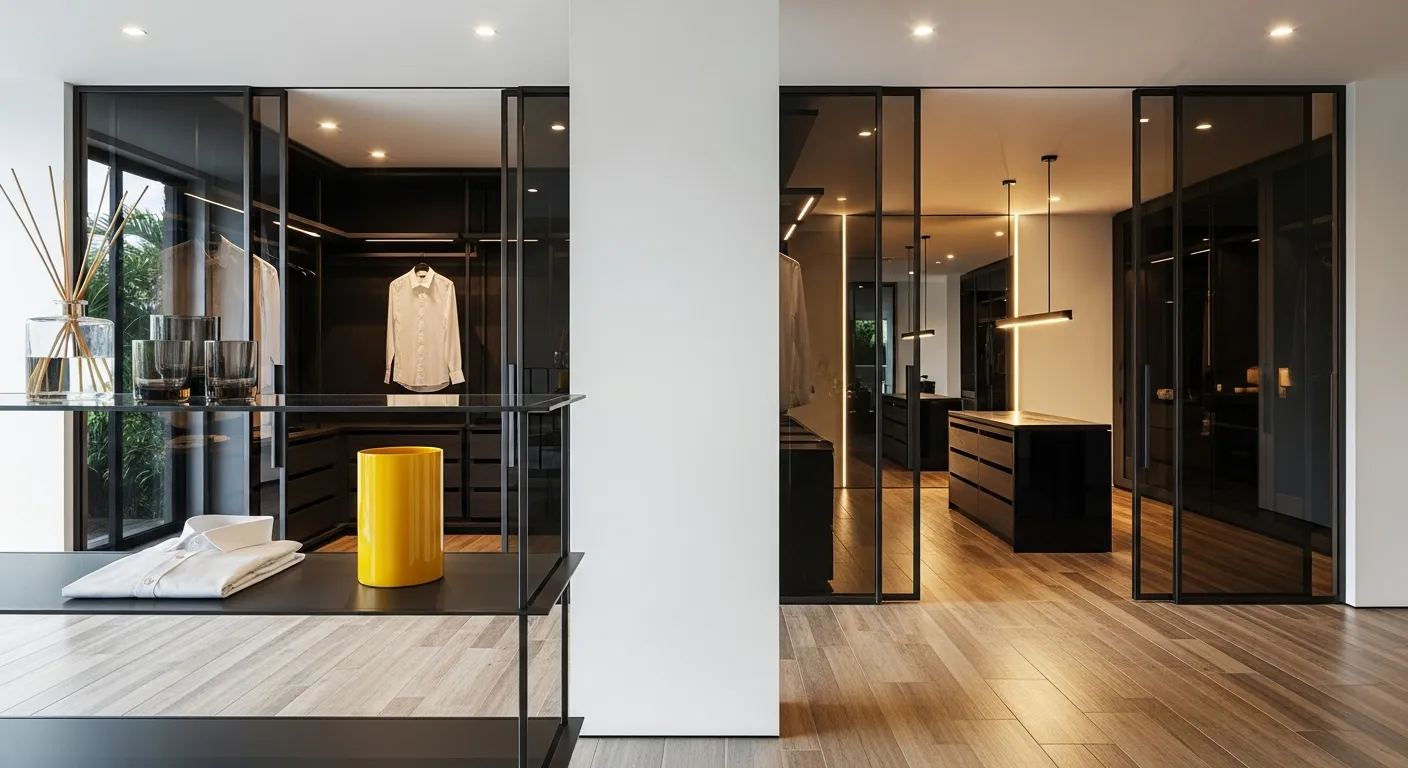
If you've ever ordered a standard cabinet door frame only to find it doesn't quite fit, finish, or function the way you expected, you're not alone. Standard frames are built for the average project, not yours. Custom aluminum cabinet door frames take a different approach. They're designed around your exact space, style, and performance requirements. Whether you're outfitting a kitchen, commercial display case, or architectural project, the difference between standard and custom becomes clear fast. This article breaks down exactly what you gain by going custom and why it's often the smarter move.
What Sets Custom Aluminum Cabinet Door Frames Apart
Standard frames come in predetermined sizes, profiles, and finishes. They're manufactured at scale, which means they're built to cover a broad range of needs rather than any specific one. Meanwhile custom aluminum cabinet door frames work differently. Each frame gets produced to your specified dimensions, profile style, and surface treatment, so what you receive matches your project from the start.
The core difference lies in precision. A standard frame might get close to your requirements, but "close" often means you have to adjust the surrounding structure, trim gaps with filler, or accept a finish that's slightly off. Custom frames remove that compromise. You specify what you need, and the frame gets built to those specs exactly.
Aluminum is particularly well-suited to this process. It holds tight tolerances during fabrication, which means the profiles stay consistent and true across multiple pieces. For projects that require several matching frames, consistency matters more than most people expect. One misaligned frame in a row of cabinets can throw off the entire visual line of the installation.
Durability and Structural Advantages Over Standard Frames
Aluminum has a strength-to-weight ratio that most frame materials can't match. It resists corrosion naturally, holds up in humid environments like kitchens and bathrooms, and doesn't warp, crack, or swell the way wood-based materials can over time. For cabinet door frames specifically, that translates to better long-term performance with less maintenance.
Standard frames often use thinner material or lower-grade alloys to keep costs down. That's a reasonable trade-off for low-traffic or temporary applications, but it becomes a problem in spaces that see daily use. Doors that open and close hundreds of times a year put constant stress on the frame. A frame built from quality aluminum stock, cut and assembled to exact tolerances, handles stress more effectively than a thinner standard alternative.
Another structural advantage is joint integrity. Custom frames get fabricated with corner joints and connections sized specifically for the frame's dimensions and intended load. Standard frames often rely on universal corner pieces that may not distribute stress as efficiently. Over time, that difference shows up as loosening joints, misaligned doors, or visible gaps where pieces no longer sit flush.
Design Flexibility and Finish Options You Won't Get With Standard
One of the most immediate advantages of going custom is the range of design choices available to you. Standard aluminum frames typically come in a handful of profiles and a limited selection of finishes, usually mill finish, clear anodize, or basic powder coat colors. If your project calls for something outside that narrow range, you're left to compromise.
Custom fabrication opens that up significantly. You can select from a wide variety of extrusion profiles, from slim and minimalist to heavier architectural styles. Finish options extend to a broad spectrum of powder coat colors, anodized tones, and specialty treatments. If your cabinetry needs to match a specific design palette or coordinate with other architectural elements, a custom frame gives you that control.
Beyond aesthetics, profile selection also affects function. Different frame profiles accommodate different glass thicknesses, insert types, and hardware configurations. A standard frame might accept only one or two glass thicknesses, which limits your material choices. With a custom profile, you can specify the exact groove depth and width needed for your insert, whether that's standard glass, tempered panels, or specialty glazing. That level of control simply isn't available with off-the-shelf options.
How Custom Sizing Eliminates Fit and Function Compromises
Standard frames come in fixed-size increments. If your cabinet opening doesn't align with one of those increments, you face a choice: modify the opening, use filler strips, or accept a frame that doesn't quite fit. Each of those options adds cost, labor, or visual imperfection to the project.
Custom sizing resolves that problem at the source. You provide the exact dimensions of your opening, and the frame gets cut and assembled to match. There's no need to adjust the surrounding structure or hide awkward gaps with trim. The installation goes cleaner, the result looks more intentional, and the door functions properly from day one.
This becomes especially relevant in renovation or retrofit projects where existing openings rarely conform to standard dimensions. Older cabinetry, architectural irregularities, and non-standard room layouts all create situations where standard frames fall short. Custom sizing handles all of those cases without requiring you to rework the structure around the frame. It's a straightforward solution to what would otherwise be a recurring headache across the life of the project.
Long-Term Value: Upfront Cost vs. Lifetime Performance
Custom frames cost more upfront than standard options. That's simply true, and it's worth acknowledging directly. But the comparison doesn't end at the purchase price. The real question is what each option costs you over the life of the installation.
Standard frames that require modifications, filler strips, or workarounds add labor costs to the project immediately. If those frames wear out sooner, require adjustments, or need replacement in five to seven years, the initial savings disappear quickly. By contrast, a well-built custom aluminum frame installed correctly should perform without issue for decades.
There's also the cost of aesthetics. A frame that doesn't fit well or finish correctly affects the perceived quality of the entire installation. In commercial spaces, that affects customer perception. In residential settings, it affects resale value. Custom frames deliver a result that holds up both structurally and visually over time, which makes the higher upfront cost a reasonable investment rather than a luxury.
Key Considerations Before Making Your Decision
Custom aluminum frames are the right choice for most applications that require precision, performance, or a specific aesthetic. That said, there are a few things to think through before you place an order.
First, lead time. Custom fabrication takes longer than pulling a standard frame off a shelf. If your project has a tight deadline, factor that in and order early. Most fabricators can give you a clear production timeline upfront, so build that into your schedule from the beginning.
Second, have your measurements confirmed before you order. Custom frames are built to the dimensions you provide. An error in measurement means a frame that doesn't fit, and correcting it requires a new production run. Take the time to measure carefully, ideally more than once, and confirm the specs with your fabricator before production starts.
Finally, clarify your finish requirements early in the process. Different finishes have different lead times, minimum order requirements, or material restrictions. If you need a specific powder coat color or an anodized treatment, confirm availability before you commit to a timeline. A little planning up front saves a lot of friction later.
Conclusion
Custom aluminum cabinet door frames outperform standard options across nearly every measure that matters: fit, finish, durability, and long-term value. Standard frames have their place in simple, low-stakes applications, but for any project where precision and quality count, custom is the more practical choice. Take the time to get your specs right, work with a fabricator who understands your requirements, and you'll end up with a result that performs and looks the way you intended.

